Lost Creek, Austin

Opener Installation for Lost Creek's 1980-Era Garages

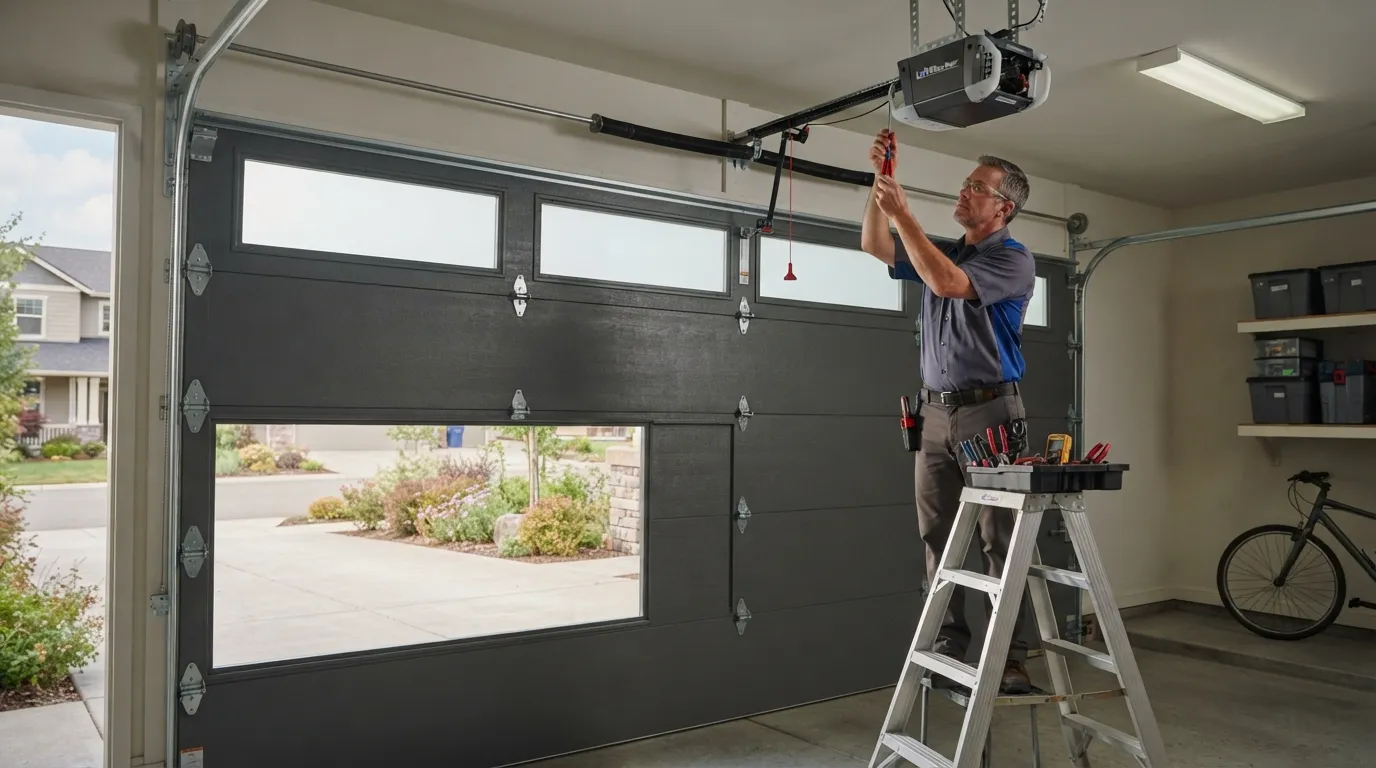
Lost Creek homes date to around 1980, near the oldest end of our service area's housing stock. We swap out aging chain-drive openers for modern units in one visit.

Opener Installation for Lost Creek's 1980-Era Garages in Austin
Same-day service in most cases
Serving Austin, TXBackground-checked techsHonest, upfront pricingFast local response

Watch-outs

What Can Go Wrong

Lost Creek's homes cluster right at the start of the build curve we see across the wider Austin area - houses here went up around 1980, while the broader service area runs from 1980 out to 2014 with a median closer to 1998. That puts Lost Creek near the oldest end of that range, which matters for openers specifically.

Chain-drive units with no rolling code

A unit installed when the house was built, or a first replacement from the 1990s, is likely a chain-drive with no rolling code, no battery backup, and a logic board that predates the safety-sensor mandates most homeowners assume are already there.

Stripped drive gears

The drive gear strips inside the housing, giving off a slow grinding sound before it lets go entirely - that grinding is the clearest early warning an opener gives before it fails completely and leaves the door stuck mid-cycle.

Cooked motor capacitors

The capacitor in the motor cooks itself over enough summers, which on a unit already decades old is often the point where repair stops being worth it compared to a straight replacement of the whole drive unit.

Misaligned or missing sensor eyes

The sensor eyes either were never installed or have been knocked out of alignment for years without anyone noticing because the door still closes - right up until it doesn't. On a house this age, we also find openers wired straight to a wall switch with no keypad or remote logic newer than a fixed code, which is a security gap as much as a convenience one.

Pricing

What You Pay

We don't quote opener pricing here - that lives on the page covering opener installation for the whole service area, since the unit cost, drive type, and any structural bracing needed don't change because you're in Lost Creek specifically. What does change is scope creep: on a house built around 1980, we often find the header above the door needs a look before a new opener goes up, because the original bracket was sized for the lighter unit that's coming out.

Lost Creek's median household income runs $160,609, well above the $121,750 average across our service area. In practice that shows up as a different mix of requests - more homeowners here ask for WiFi-enabled units with battery backup and camera integration on the first call, instead of a straight swap to the cheapest comparable drive. We'll always quote both, but it's fair to say the calls out this way skew toward the higher end of what's on the truck.

What You Pay

Our process

How We Fix It

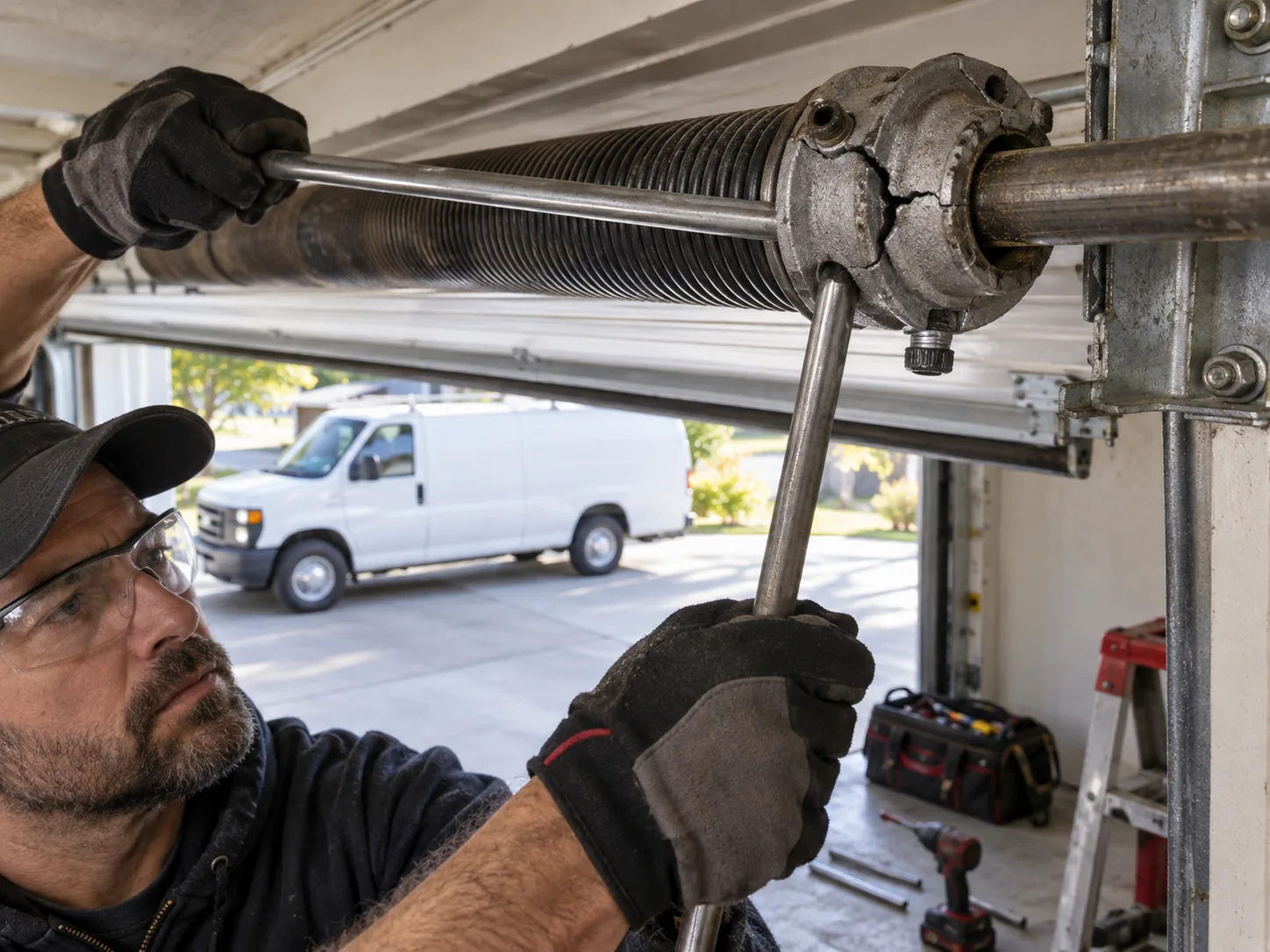
First call is diagnosis, not sales: we check whether the opener itself has failed or whether it's a symptom of something upstream - a spring that's lost tension and is making the motor do work it shouldn't, or track misalignment that's binding the carriage.

  1. Diagnose before recommending a fix

    On a 1980-built door, the opener is rarely the only thing worth touching, so we tell you straight if the drive unit is fine and the real problem is mechanical, since replacing a working opener wouldn't actually solve anything.

  2. Mount the new unit to the header

    If it is the opener, we pull the old unit, check the header bracket for the era of house you're in, and mount the new drive to a standard that will outlast the current door if you don't replace that too.

  3. Program and test safety reversal

    We program the remote and keypad logic on site and test the safety reversal before we leave - that's not optional, it's the same check code requires everywhere in this climate band, moderate heat included, since sensor plastic and door weight both shift a little as garages heat up through the summer.

  4. Flag a door or track that needs its own fix

    One limit worth saying plainly: if the door itself is warped or the track is bent beyond a simple realignment, a new opener on top of it is a bandage. We'll tell you when replacement of the door is the better spend, even if that's not the call that brought us out.

Warning signs

What You Are Seeing

The signs on a house this age are consistent enough that we can usually guess the vintage before we see the unit. Here's what each one usually means, and which ones are a quick fix rather than a sign the whole opener is done.

Slack chain or short remote range

A chain that's visibly slack and slapping the rail, a remote that only works from inside the car when you're pointed straight at the door, or a keypad with worn-off numbers because it's the original from move-in - if your opener still uses a fixed code you can see printed on a dial inside the housing, that's original-era hardware, not a recent replacement.

Light kit wired to the door circuit

Openers mounted with the light kit as the only illumination in the garage, wired on the same circuit as the door motor, are a pattern specific to this stretch of houses. When that circuit trips, people assume the opener died - it's usually just the breaker, but it's worth checking before you call anyone out for a unit that isn't actually broken.

Door reverses on its own

If the door reverses on its own partway down, don't disable the sensors to get around it. That's the safety reversal doing its job, and on a house at this build year it usually means the sensor eyes have drifted out of alignment over time rather than a wiring fault - a five-minute fix once someone's looking at it in person.

What Is on the Truck

On the truck

What Is on the Truck

For a straight opener swap we carry belt and chain drive units in the range most 1980s-era doors need, along with the heavier-duty brackets that older headers sometimes require once the original hardware comes off. We stock standard remotes and keypads with rolling-code logic, since fixed-code units are what we're usually replacing.

We do not stock every smart-home integration on the market - if you want a specific ecosystem tied to a particular app, tell us before the appointment so we can confirm compatibility rather than improvise on site. Given Lost Creek runs higher than the service-area median on income, we do keep battery-backup and WiFi-enabled units on the truck as a default option rather than something we have to special-order, which cuts down on the second trip a lot of homeowners expect but don't need.

Questions

Common questions

Is my opener too old to just repair instead of replace?

If it's a fixed-code chain drive from around when the house was built in 1980, parts for that logic board are hard to source and not worth chasing. We'll check first - sometimes it's a simple capacitor or sensor fix - but a full swap is often the more honest answer on a unit this age.

Do you carry battery backup units for Lost Creek calls?

Yes, we keep them on the truck as a default rather than a special order, since that's the unit most homeowners in this part of the service area end up choosing over a basic chain drive.

How far out is Lost Creek from your shop?

About six miles from Austin. That's close enough that a standard opener swap is a single appointment - we don't need a second trip for parts unless we find something unexpected once the old unit's off the header.

Will a new opener fix a door that won't close all the way?

Not if the problem is the door or track and not the motor. We check both before recommending a new opener, and we'll tell you plainly if the door itself needs work first - putting a new drive on a bent track just moves the failure point.

Ready when you are

Need a garage door sorted in Austin?

Austin Garage Door Guys repairs and installs garage doors, springs and openers in Austin, TX and the surrounding area.

CallGet a quote