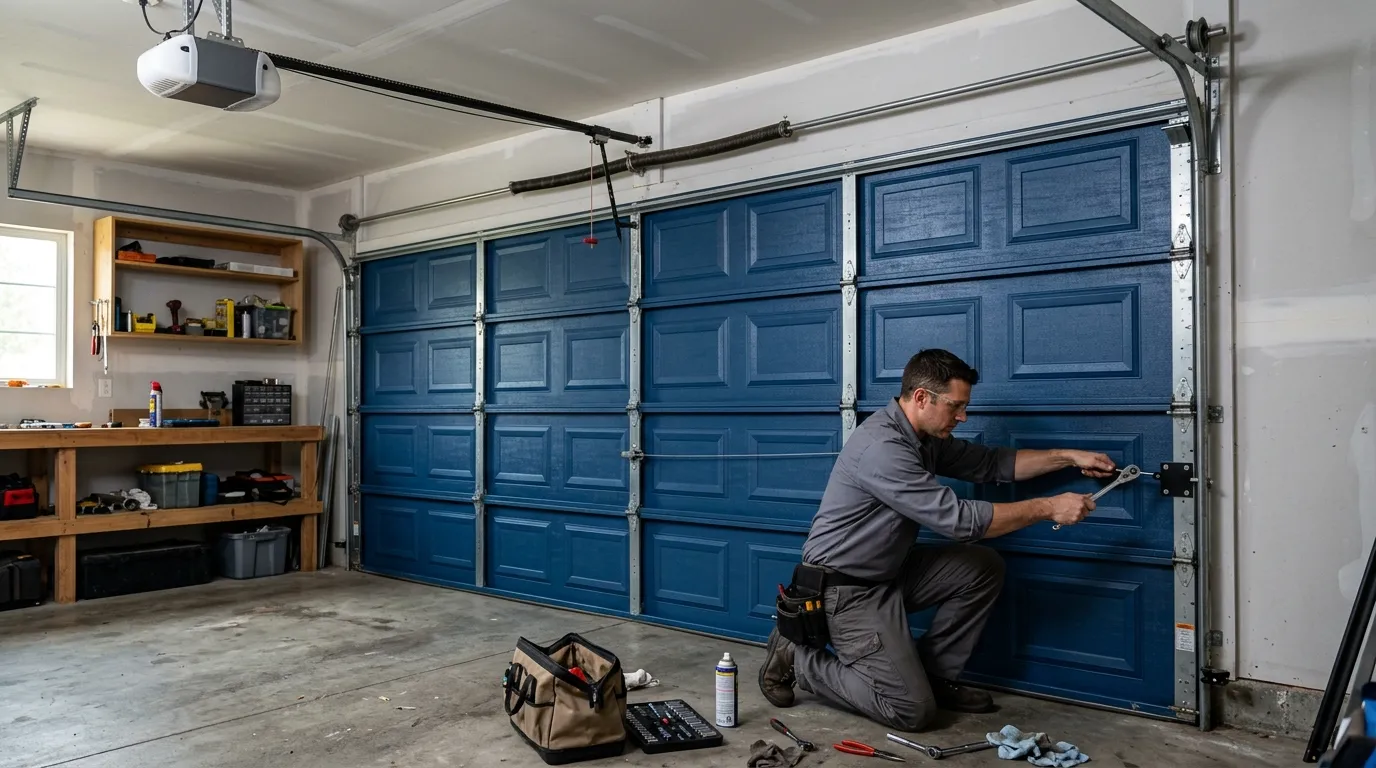
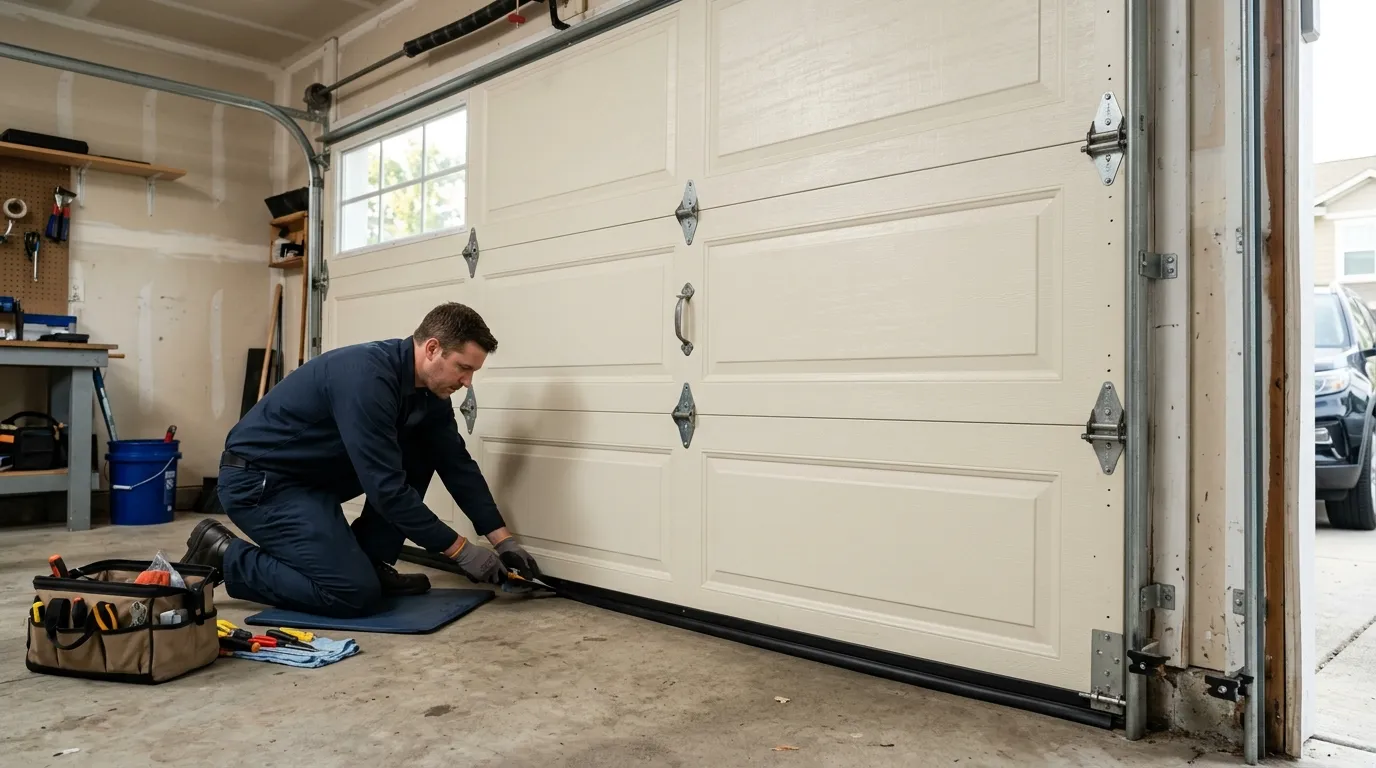
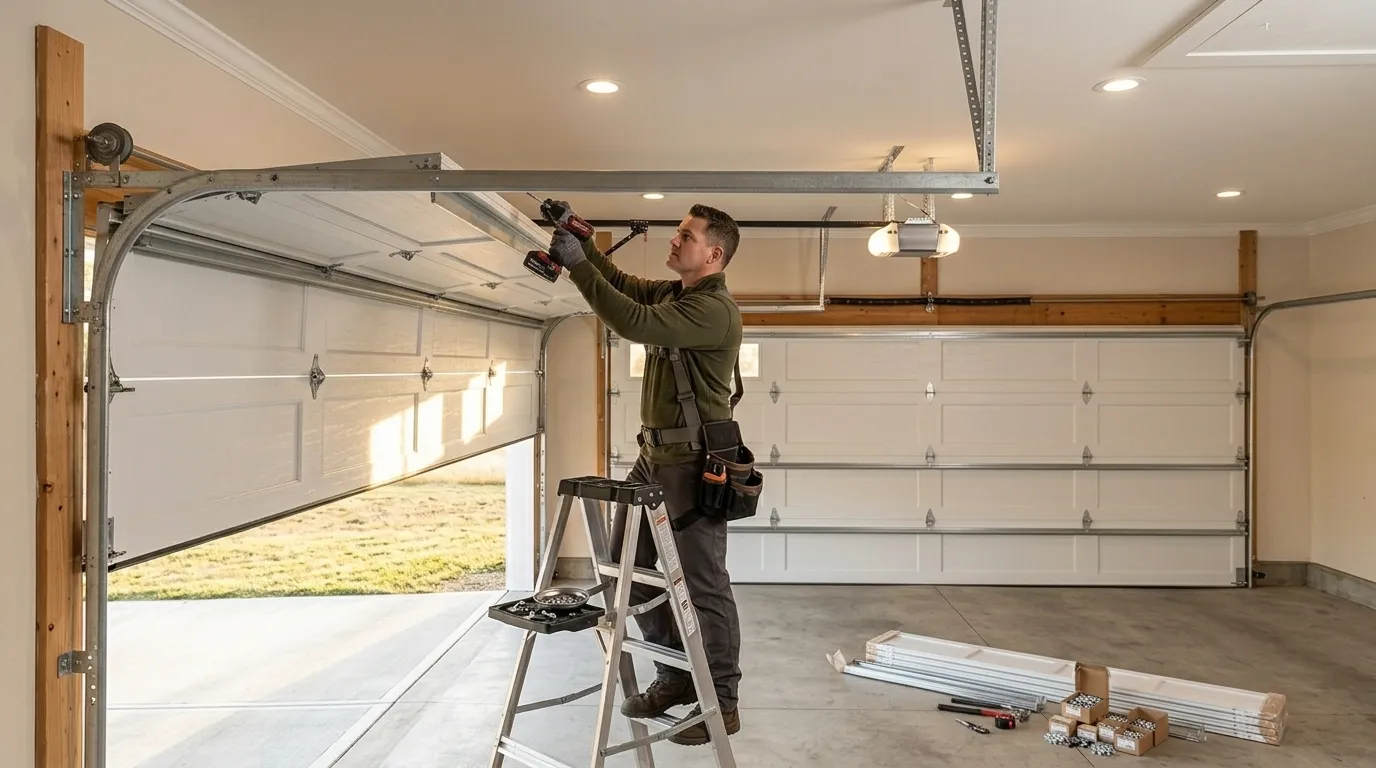
Most of the garage doors we work on in Austin went in somewhere between 1980 and 2014, with the heaviest concentration from the 1980s and 90s, and that pattern holds across the 23 areas we track, from Allandale and Brentwood in the north-central part of town to Barton Hills and Bouldin Creek south of the river. A door and opener installed in, say, 1991 has now run through more than thirty Austin summers, and that's the part people underestimate.
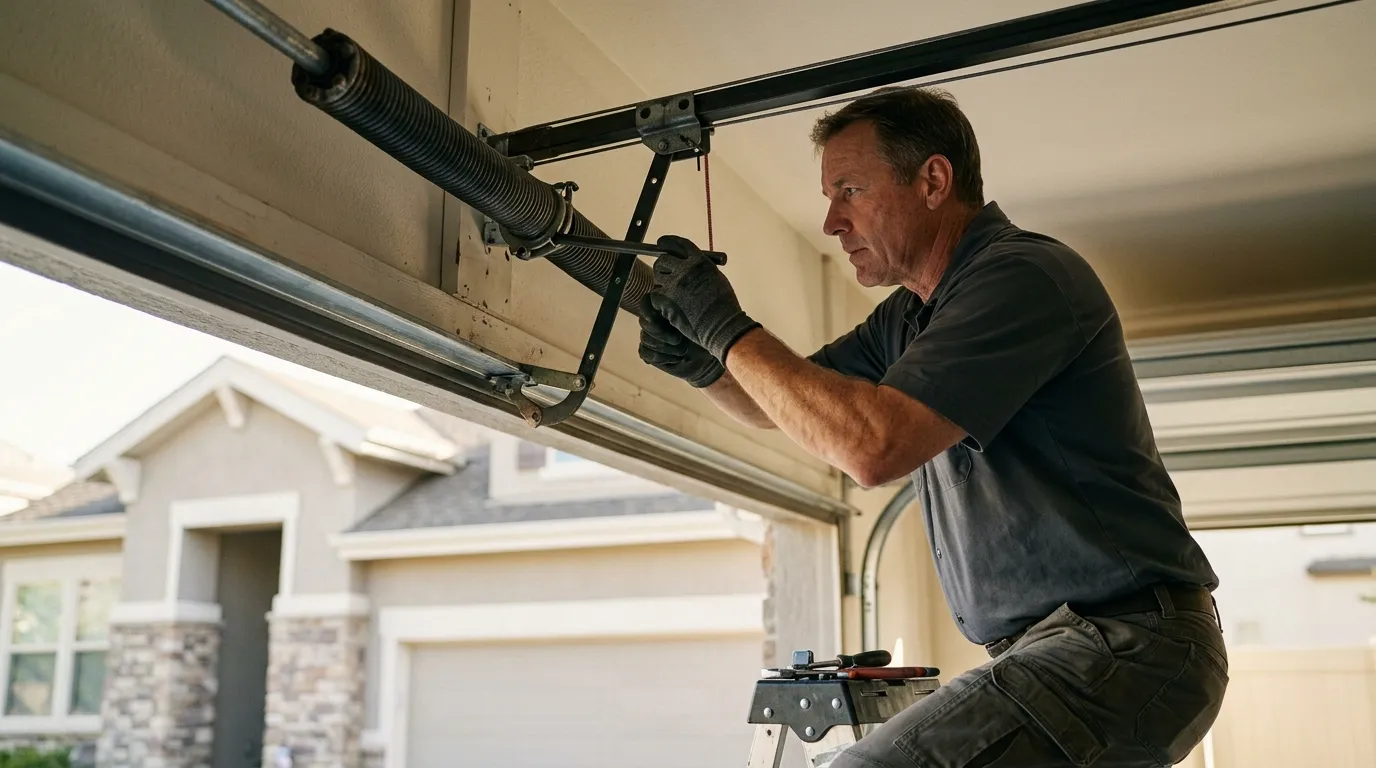
Our climate band here sits in the moderate-heat range, which doesn't sound dramatic next to a desert town, but it's steady, sustained heat on a garage that often has no insulation and one small vent. Steel panels expand and contract every day for years. Nylon rollers and plastic idler bearings dry out and crack faster than the sales literature ever says. Torsion springs rated for a certain cycle count get there sooner when the metal is running hot most of the day, not just in July.
So the failure you're seeing isn't random bad luck. It's a 1990s-built door, in a moderate-heat climate, finally hitting the end of parts that were never meant to last forever. Newer builds after 2010 or so tend to have better-sealed openers and heavier gauge track, which is part of why the fault shows up more in the older stock than the newer subdivisions.