What Local Conditions Do
Austin sits in a moderate-heat climate band, and that matters more for a garage door seal than most homeowners think. It's not freeze-thaw cracking that kills a bottom seal here - it's sun and heat cycling the rubber day after day, drying it out until it splits or pulls away from the retainer. Most of the houses we work on went up between 1980 and 2014, with the bulk of that stock dating to the 1980s and 90s (median build year 1998). Doors from that era usually came with a basic PVC or rubber bottom astragal and thin foam-core weatherstripping around the jambs, neither built for thirty-plus years of Texas sun. By now that stock is well past its expected seal life, whatever the original install looked like. You'll feel it as a draft along the bottom edge, sometimes strong enough to move a broom leaning nearby, or you'll see daylight at the corners where the panel no longer sits flush. That gap isn't cosmetic. It's a channel for dust, heat, and the occasional wasp looking for a way in.
When to Call Someone
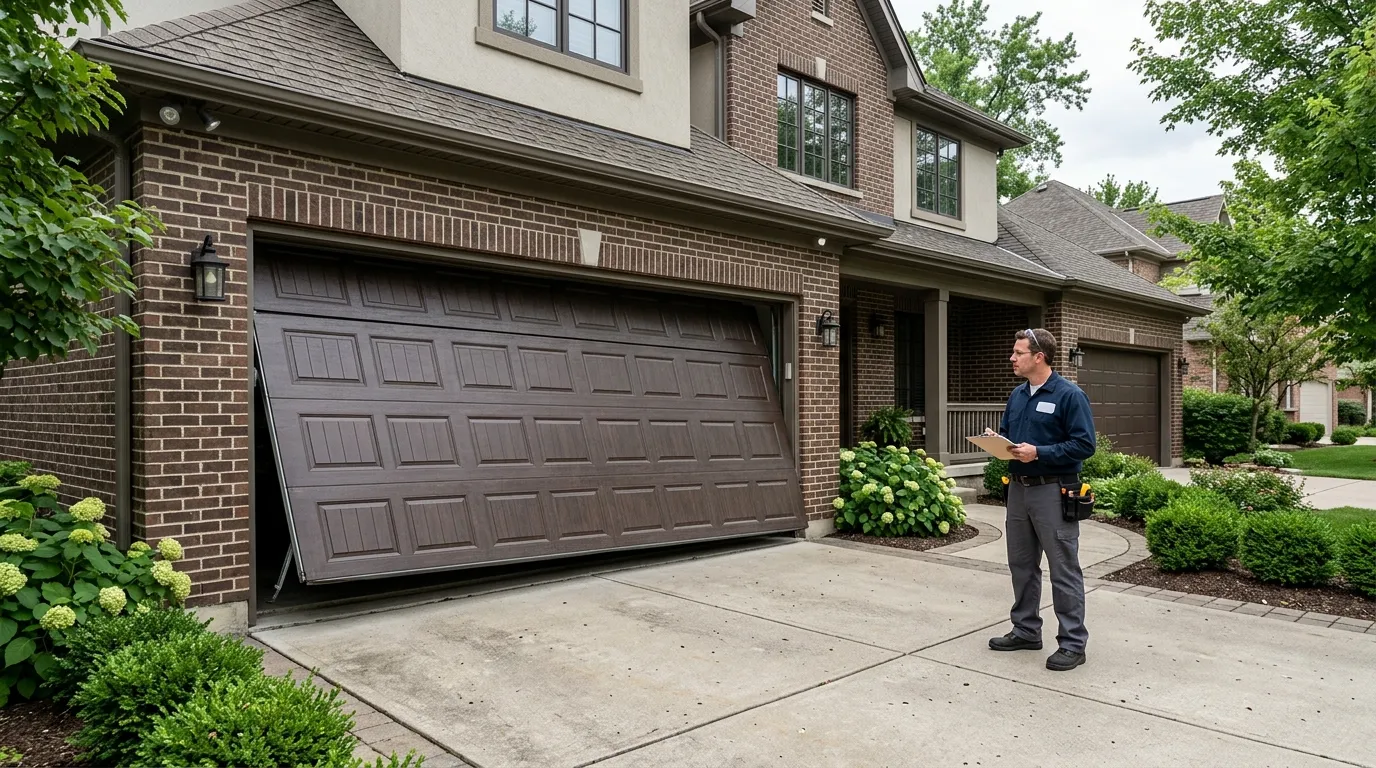
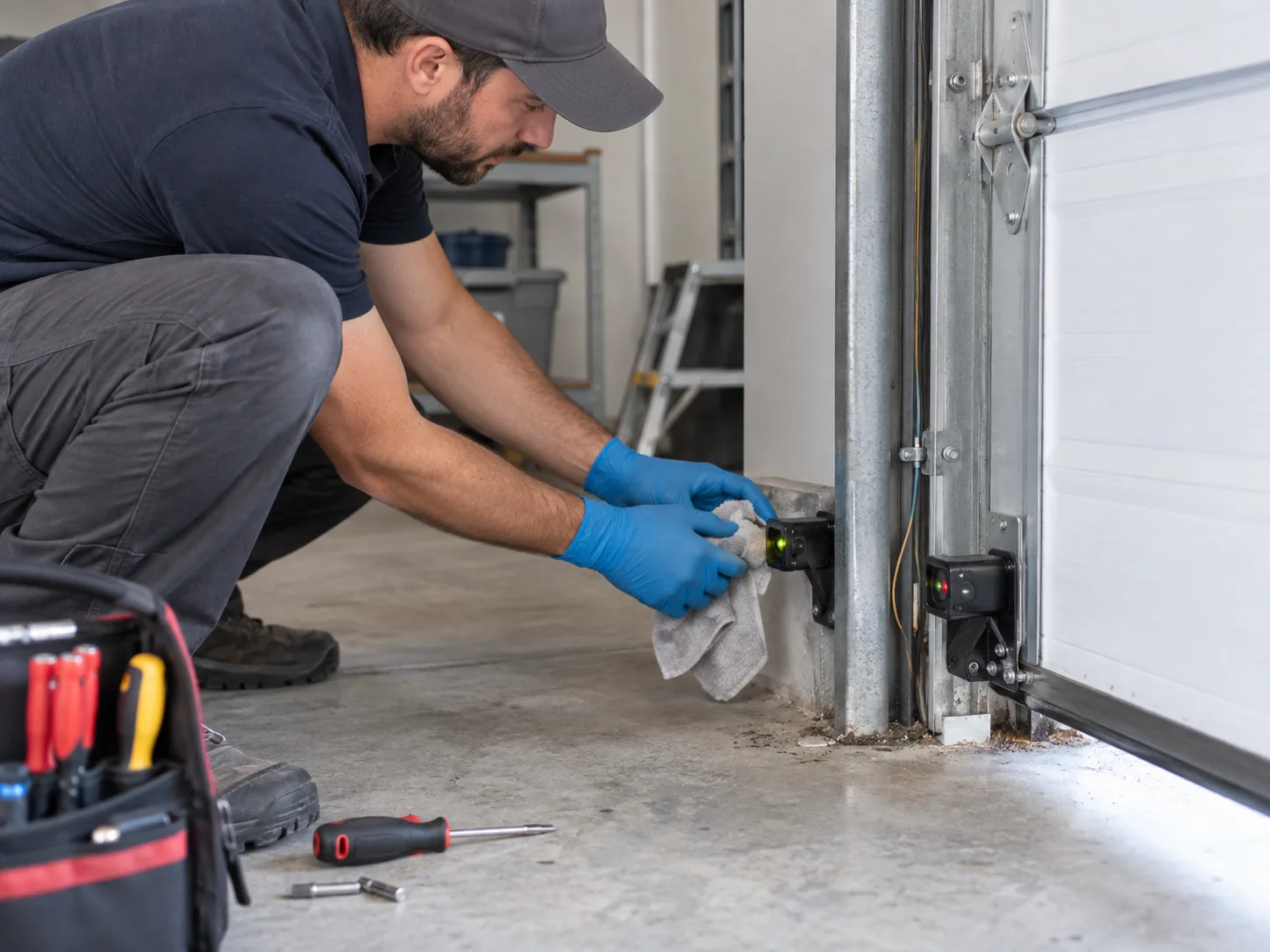
Call if you can see daylight under the closed door, if the bottom seal has hardened and cracked rather than flexed when you press it, or if the door closes but you still feel air moving across the garage floor on a still day. Those are seal problems, not opener problems, and they're usually a straightforward fix. Call sooner rather than later if the seal has pulled loose in sections - a partially detached bottom seal lets water pool under the door track, and on a slab built in the late 80s or 90s that water has nowhere to go but toward the framing. What you don't need to call for: minor gaps that only show up in direct afternoon sun, since metal panels expand slightly in heat and that's normal, not a defect. If your main complaint is a noisy door rather than a drafty one, that's a roller or hinge issue, not a seal issue, and it's a different job.
The Situation
We work across a service area that runs from Tarrytown, about a mile west, and University, a mile ESE, out through neighborhoods like Rosedale, Allandale, Zilker, and Mueller, to farther points like Steiner Ranch and Bee Cave ten to twelve miles out. That's a wide spread, but the door stock is consistent: mostly 1980s-90s construction across the named areas, which means we see the same three or four seal and weatherstrip designs on repeat, and we know which ones age well and which ones don't. The service area covers roughly 73,657 households, with 41,792 of those owner-occupied houses - enough volume that we're rarely looking at something we haven't already replaced ten times over. What we don't do is guess at a fix over the phone. A seal that looks fine in a photo can still be seated wrong, and the only way to know is to look at the track and jamb in person.
What You Pay
We don't have a posted price list here, and I'm not going to invent one - what a seal job costs depends on door width, whether the retainer track needs replacing along with the rubber, and whether the jamb weatherstripping has to come out too. What I can tell you is how the math tends to work in this area: with a median household income of $121,750 across the service area, most homeowners we talk to would rather pay once for a full seal replacement than patch the same gap twice in two summers. A patch job - cutting in a new strip of bottom seal without checking the retainer - is cheaper up front and often the wrong call if the retainer itself is warped from heat, which is common on doors from the 1980s and 90s stock that makes up most of what we see. Ask for the retainer to be checked, not just the rubber.
Talk to a local pro
Garage door trouble in Austin?
Same-day service with honest, upfront quotes.