What Local Conditions Do
Most of the housing across the Austin service area went up between 1980 and 2014, with the bulk of it dating to the 1980s and 90s. That matters for tracks because builders in those decades used lighter-gauge steel track and fewer horizontal supports than what goes into a door installed today. Thirty-plus years on, brackets that were torqued once at construction and never touched again have worked loose a fraction of a turn at a time.
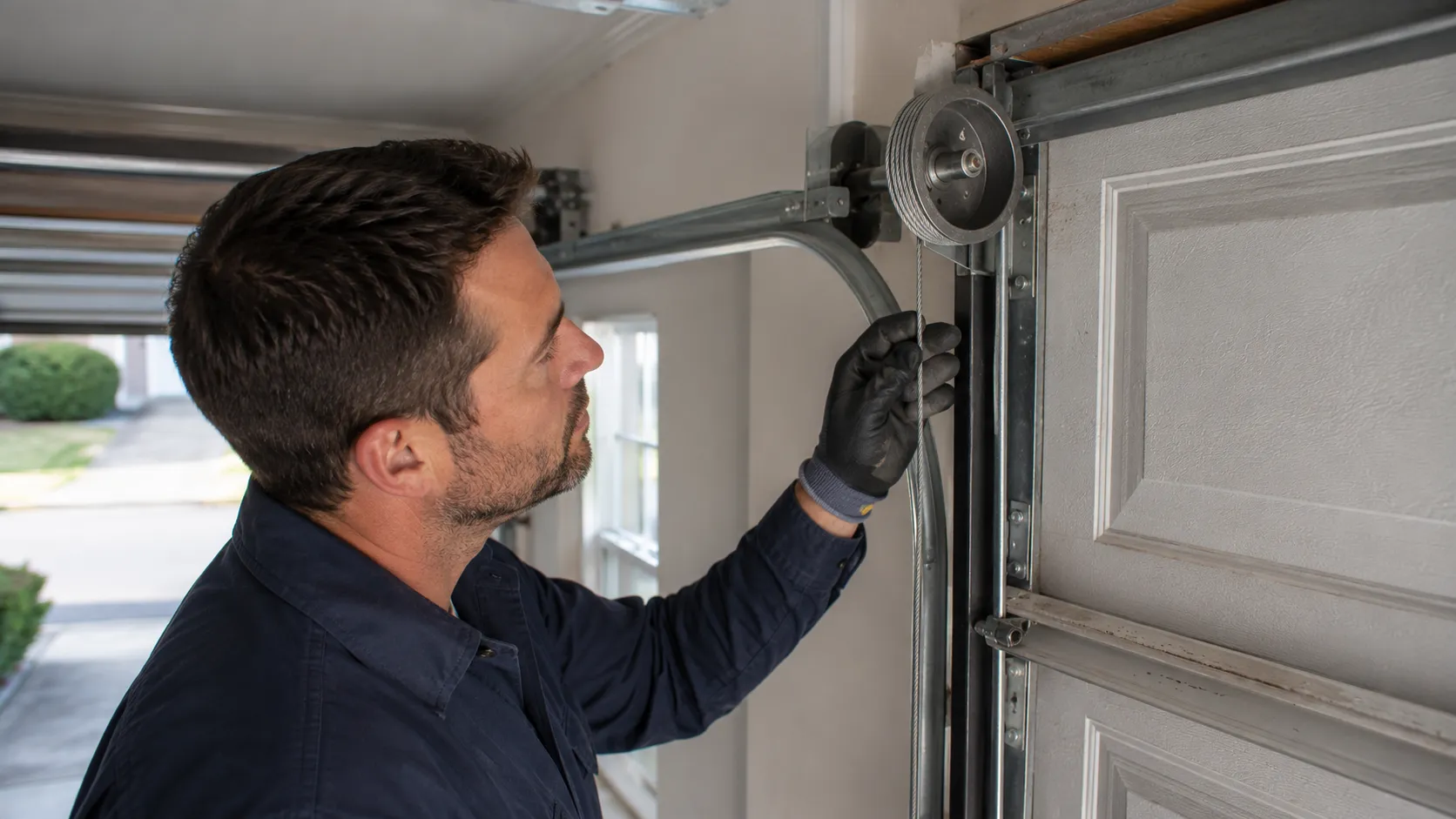
Austin sits in a moderate heat climate band, which means the garage itself swings in temperature across the day more than the inside of the house does. Steel track expands and contracts with that swing. On a door with even a slightly bent section, the repeated flex is what walks the rollers toward the edge of the track until one of them finally jumps it. This isn't a defect in the door - it's thirty years of small movements adding up in a specific kind of housing stock.
One more piece: this same age range means original tracks are often still paired with the door's original rollers, which by now are the hardest part of the system and least forgiving of any misalignment.
When to Call Someone
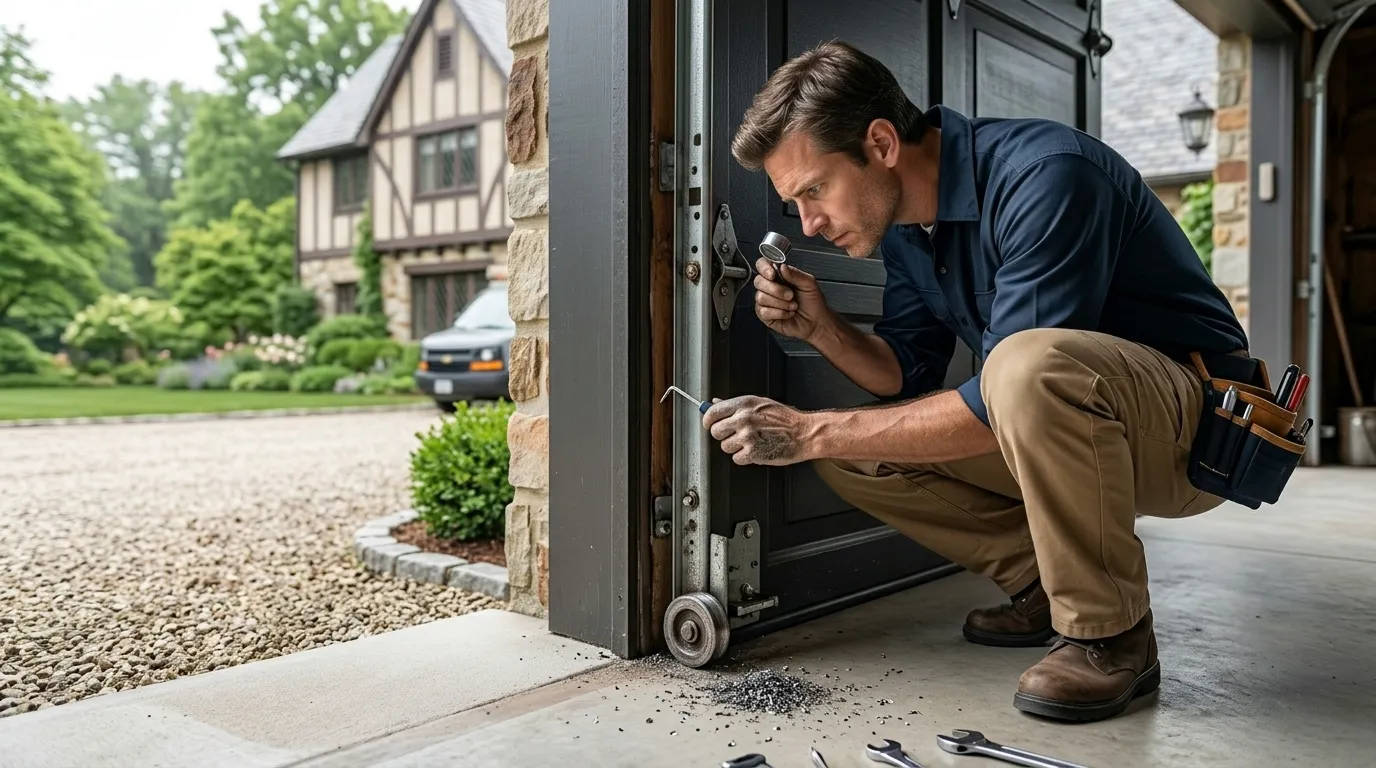
A door that's rubbing, grinding, or hesitating at one spot in its travel is telling you a roller is already riding the edge of the track, not the center. That's a call-now situation, because once a roller comes off track fully - especially on the closing stroke - it can bind the door at an angle and put load on the opener arm that the opener wasn't built to carry.
If you can see daylight between a roller and the track wall, or the door visibly leans as it moves, stop opening it by remote and don't force it by hand either. A door hanging at an angle with the spring still tensioned is one of the more common ways people get hurt working on their own garage.
We don't do same-day work as a blanket promise - that's not something I can back up in writing here - but a door that's off track and still under tension is the kind of job that gets moved up.
The Situation
Across the neighborhoods we cover - from Tarrytown and Old West Austin a mile or two out, through Zilker, Bouldin Creek, and Allandale, out to West Lake Hills, Steiner Ranch, and Pflugerville - the housing stock is different enough in age and construction that the track problem shows up on a schedule. Homes from the 1980s and 90s cluster of construction are the ones we see most often for track wander, simply because they're the largest single group of houses in the area and they're now old enough that original hardware is tired.
Newer construction closer to 2014 tends to have heavier track and better-supported brackets, so when we do see a track issue on a newer house, it's usually installation-related rather than age-related - a bracket that was never fully seated, or a section that wasn't shimmed level against a garage wall that isn't perfectly plumb.
What You Pay
I don't have a rate card to hand you here, and I'd rather say that than guess. What I can tell you is how the decision usually goes: realigning track and swapping worn rollers is a repair, and on a door that's otherwise sound - panels straight, springs in good shape - that's the right call most of the time. If the track itself is bent from the door having come off and been forced back by hand, or if it's badly rusted, patching it usually costs about the same as replacing that section outright, and it won't hold as long.
The median household income across this service area runs a good bit above the national figure, and a lot of homeowners here choose to replace rather than nurse along a 25-year-old track system once it's failed once already. That's a reasonable call, but it's not the only reasonable call - a straight repair on a track that just walked loose, without other damage, is often the more sensible fix.
Talk to a local pro
Garage door trouble in Austin?
Same-day service with honest, upfront quotes.