Lost Creek, Austin

Emergency Garage Door Repair for Lost Creek Homes

437 households, one age of stock, one common failure: 1980-built torsion springs giving out. Austin Garage Door Guys runs emergency calls into Lost Creek, 6 miles out.

Emergency Garage Door Repair for Lost Creek Homes in Austin
Same-day service in most cases
Serving Austin, TXBackground-checked techsHonest, upfront pricingFast local response

Watch-outs

What Can Go Wrong

Lost Creek is small - about 437 households, not the tens of thousands found across the wider service area - and that scale shapes what actually breaks here. Almost every garage door in this pocket went in around 1980, so nearly every torsion spring, drum, and cable set is aging on the same clock.

Snapped torsion springs

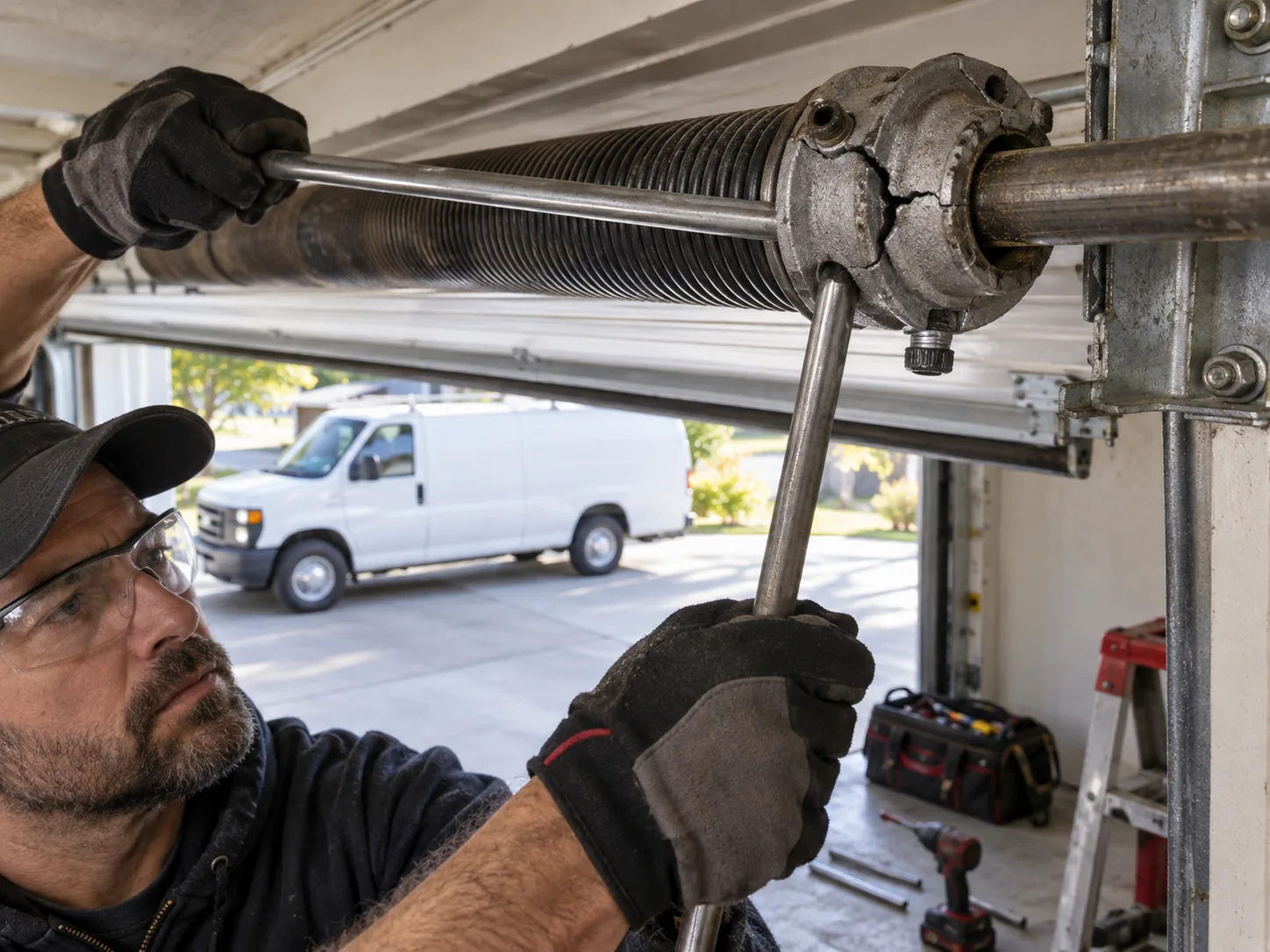
The common failure we see from this pocket is a torsion spring on a double door finally giving out after four decades of cycling, sometimes taking a cable with it and sometimes just leaving the door dead on the track. It isn't usually an isolated fluke - it's wear that's been building since 1980 finally letting go.

Worn chain-drive openers

Openers from this era are also on borrowed time, since many homes here still run the original chain-drive unit, and the gears inside those wear down long before the motor itself quits outright. A door that stalls or grinds partway through its cycle is often the gear set, not a dead motor.

Heat-stressed seals and gears

Central Texas heat doesn't help matters - a moderate but sustained heat load stresses the plastic gears inside older openers and dries out the door's weatherstripping seals faster than it would in a cooler climate. None of this is dramatic; it's just decades of wear arriving in a lot of houses at once.

Pricing

What You Pay

We don't have a published flat rate for emergency calls into Lost Creek, and we're not going to invent one here. What we can tell you is what tends to drive the cost: whether it's a spring-only fix or a spring-and-cable fix, whether the opener is original to the house or already replaced, and whether the door itself - panels, track, rollers - took damage when the spring went. A 1980-era double door with its first spring set is a more predictable job than one that's had DIY patch repairs over the years.

Households in Lost Creek report a median income well above the regional figure, and we mention that only because it shapes a real decision homeowners here face: replace the aging opener now, on your schedule, or wait for it to fail on an emergency call, on its schedule. Neither is wrong. We'll tell you honestly on site which makes more sense for your door.

What You Pay

Our process

How We Fix It

We come out from Austin - Lost Creek is about 6 miles in, so factor drive time into when you call, since there's no local branch or truck stationed in the neighborhood itself. Once on site, we work through the same sequence on every dead or off-track door this age.

  1. Check spring and cable first

    Once we're on site, the first move on any dead or off-track door is to check the spring and cable before touching the opener, because on a house this age that's where the fault usually lives. Testing this first avoids chasing the opener for a problem that's actually mechanical.

  2. Replace with rated hardware

    If it's the spring, we replace it with hardware rated for the door's actual weight and cycle count, not a generic swap. Matching the spring to the door's real load keeps the balance correct instead of trading one mismatched part for another.

  3. Assess the original opener honestly

    If the opener is the original chain-drive unit, we'll say so plainly and give you the option to repair or replace - a 40-plus-year-old motor is often not worth chasing a second time. We'd rather tell you that upfront than sell a repair that won't hold.

  4. Test the full cycle under load

    We test the door through a full open-close cycle under load before we leave, and we check the travel limits and safety reverse, since those settings drift over decades of use even if nothing's visibly broken. That final check is what confirms the fix actually holds.

Warning signs

What You Are Seeing

These signs tend to repeat from house to house in Lost Creek because so much of the neighborhood shares the same age of hardware. Here's what each one usually means, and which ones mean stop using the door right away.

Silent, unresponsive opener

If the door won't move and you hear nothing at all from the opener, that's usually a dead capacitor or a stripped gear inside the unit, not a broken spring. It's a different repair path entirely, so ruling out the motor first avoids chasing the wrong part.

Stalling or reversing mid-cycle

If the door starts up and then stalls or reverses partway, that's classic worn spring tension - the opener is trying to lift more weight than it was built to handle alone. Left alone, that strain eventually burns out the motor too.

Sudden, fast drop

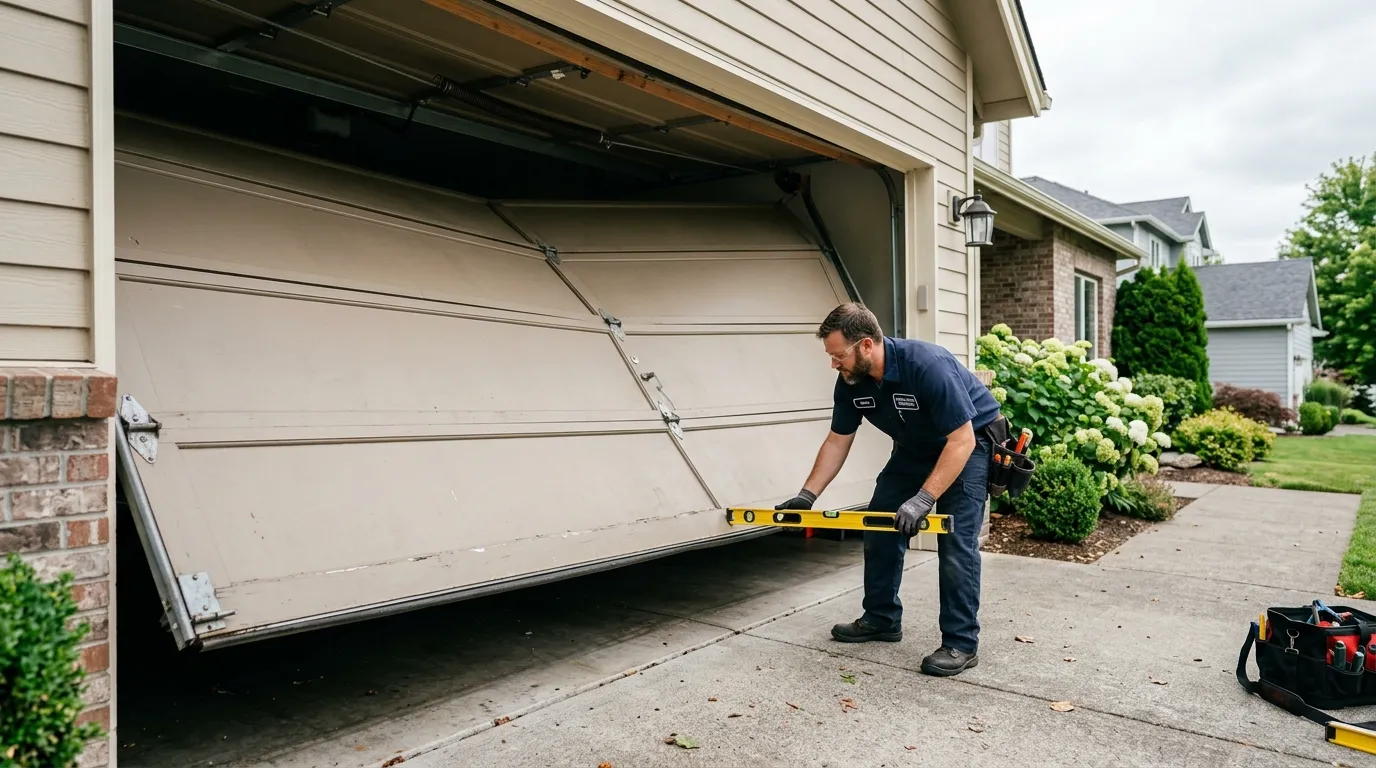
A door that drops fast and sudden, sometimes with a loud bang beforehand, is very likely a broken torsion spring, and that's the one to stop using immediately rather than force through. Running the opener against a snapped spring risks the cable and the track next.

Fraying cables near the track

Cables fraying or hanging loose next to the tracks are common on doors that have never had the spring serviced, since the cable takes on load it shouldn't when spring tension is already gone. None of these signs mean the same thing on a newer door built to current opener standards.

What Is on the Truck

On the truck

What Is on the Truck

For calls into this area we carry torsion springs sized for the double-door hardware common to 1980s-era Central Texas construction, along with matching cable sets and standard drums. We stock chain-drive opener gear kits since that's still what's running in a lot of these garages, plus the sensors and wiring needed to bring an old safety-reverse setup up to a working standard.

What we don't carry on every truck is a replacement panel section for a discontinued door model - if the spring failure damaged the door skin itself, that part sometimes has to be ordered, and we'll tell you that up front rather than promise a same-visit fix we can't deliver. We'd rather say that plainly than have you waiting on a truck that isn't coming with the part today.

Questions

Common questions

How far out is Lost Creek from your shop, and does that affect emergency response?

Lost Creek is about 6 miles from where our crews run out of in Austin. We don't have a branch located in Lost Creek itself, so factor the drive into your timeline when you call - we'll give you a realistic window rather than a guess.

Why do so many houses in Lost Creek seem to have the same garage door problem?

Because most of the neighborhood went up around the same year - 1980 - the springs, cables, and openers across the area are aging in the same window. When one homeowner's torsion spring fails, it's often a sign others nearby are close behind, not a coincidence.

Is my original 1980s opener worth repairing or should I replace it?

Depends on what's failed. A worn gear kit is often a fair repair. A dead capacitor or motor on a chain-drive unit that old is usually not worth chasing twice - we'll look at it on site and give you a straight answer instead of pushing one option.

Do you carry parts for older torsion spring setups on the truck?

Yes, for the double-door hardware common to this era we carry matching torsion springs, cables, and drums. What we sometimes can't carry is a replacement door panel for a discontinued model - that occasionally has to be special-ordered.

Ready when you are

Need a garage door sorted in Austin?

Austin Garage Door Guys repairs and installs garage doors, springs and openers in Austin, TX and the surrounding area.

CallGet a quote