Lost Creek, Austin

Garage Door Repair for Lost Creek Homes

Lost Creek homes date to 1980, older than the area's 1998 median build year. We drive out from Austin to fix original springs, tracks, and openers still in place.

Garage Door Repair for Lost Creek Homes in Austin
Same-day service in most cases
Serving Austin, TXBackground-checked techsHonest, upfront pricingFast local response

Watch-outs

What Can Go Wrong

Lost Creek's median home dates to 1980, which puts it ahead of the broader service area's 1998 median build year. That six-mile pocket west of Austin got built out early, and a lot of what went into those garages back then never came back out.

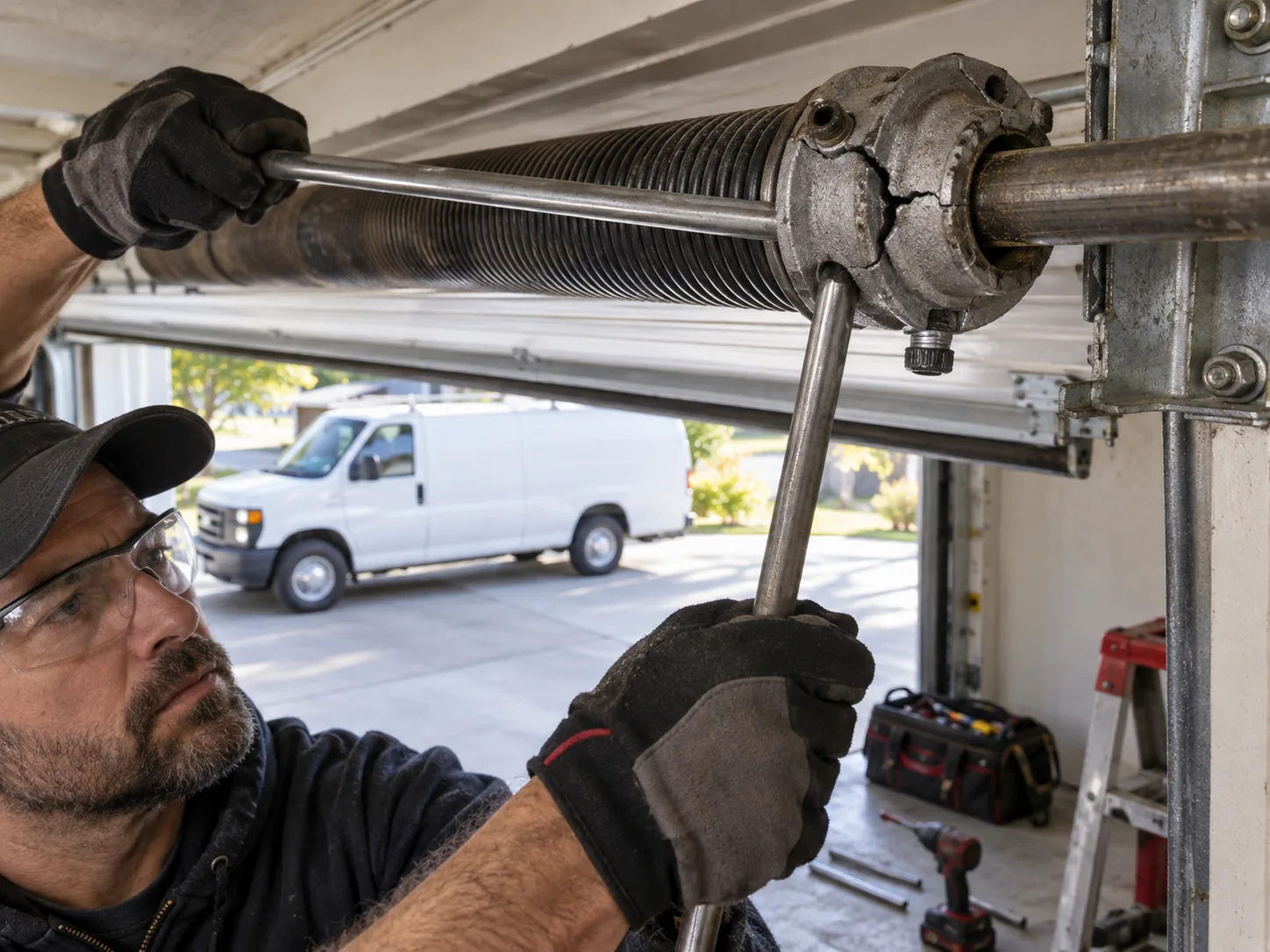
Fatigued torsion springs

Torsion springs from a 1980 install are past due by any measure - springs are rated in cycles, not years, but forty-plus years of Austin heat cycling the metal is enough to fatigue even a spring nobody's touched. That fatigue is often what fails first on these original doors.

Openers without safety sensors

Openers from that era, if they're still the originals, predate rolling-code safety and photo-eye sensor requirements entirely. Running an opener with no modern safety reversal is a real liability gap, not just an inconvenience, on a door this age.

Bent tracks and dried rollers

Tracks bend, rollers dry out and crack, and the steel cable running through pulleys that have never been lubricated starts to fray at the drum. None of this is dramatic until the day a cable snaps under a torsion spring that's already lost half its tension, and the door drops on one side.

More original hardware here

We see a higher share of original hardware in Lost Creek than in newer parts of the area simply because the houses are older and, this being a lower-turnover pocket, fewer owners have had a reason to replace anything that still limps along.

Pricing

What You Pay

We don't have a fixed price list for this page, and quoting a number without seeing the door would be a guess dressed up as a fact. What we can tell you is that Lost Creek's median household income of $160,609 sits well above the wider service area's median of $121,750, and that shows up in what people ask for out here - full spring and cable replacement done right the first time, rather than a patch job to squeeze one more year out of original hardware. With only about 437 households in Lost Creek itself, this isn't a high-volume stretch for anyone doing this work, so we're not going to pretend we roll through daily. We price the job, not the neighborhood, and we'll tell you plainly when a repair isn't worth it against a full replacement - usually once you're replacing springs, cables, and rollers all in the same visit on a door already forty-plus years old.

What You Pay

Our process

How We Fix It

We travel out from Austin for every Lost Creek repair call, since there's no branch or set arrival window here - we schedule the visit and give a realistic time instead of an exact minute. On site, we work through the hardware in the same order every time.

  1. Check bottom panels for wear

    On a house this age, we start by pulling the panel or two nearest the bottom track to check for the surface rust and hairline cracks that show up first in doors that have sat in Central Texas heat since 1980. That inspection tells us how far the wear has spread before we touch anything else.

  2. Replace springs as a matched pair

    Original torsion springs get replaced as a pair, matched to the door's actual weight rather than swapped one at a time - mismatched springs are how a door ends up tilting on one side after a cheap fix.

  3. Flag missing photo-eye safety

    If the opener is original, we check whether it has a working photo-eye safety reversal; if it doesn't, that's a code and liability issue we'll flag before doing anything else, not after. We'd rather raise it upfront than let it slide as a minor detail.

  4. Replace cables, pulleys, and rollers together

    Cables and pulleys get replaced together, since a worn pulley wheel is usually what frayed the cable in the first place. We reset track alignment rather than just tightening what's loose, because forty years of settling shifts a garage's framing more than people expect.

Warning signs

What You Are Seeing

None of these signs are cosmetic on a house this age - a door fighting worn hardware puts strain on the opener motor too, which becomes a second repair waiting behind the first one. Here's what each symptom usually points to.

Reverses before fully closing

The door that won't fully close and reverses partway up is almost always a photo-eye that's drifted out of alignment or is coated in enough dust to trip a false read - common on original openers here that never had the sensor bracket re-checked.

Heavier on one side

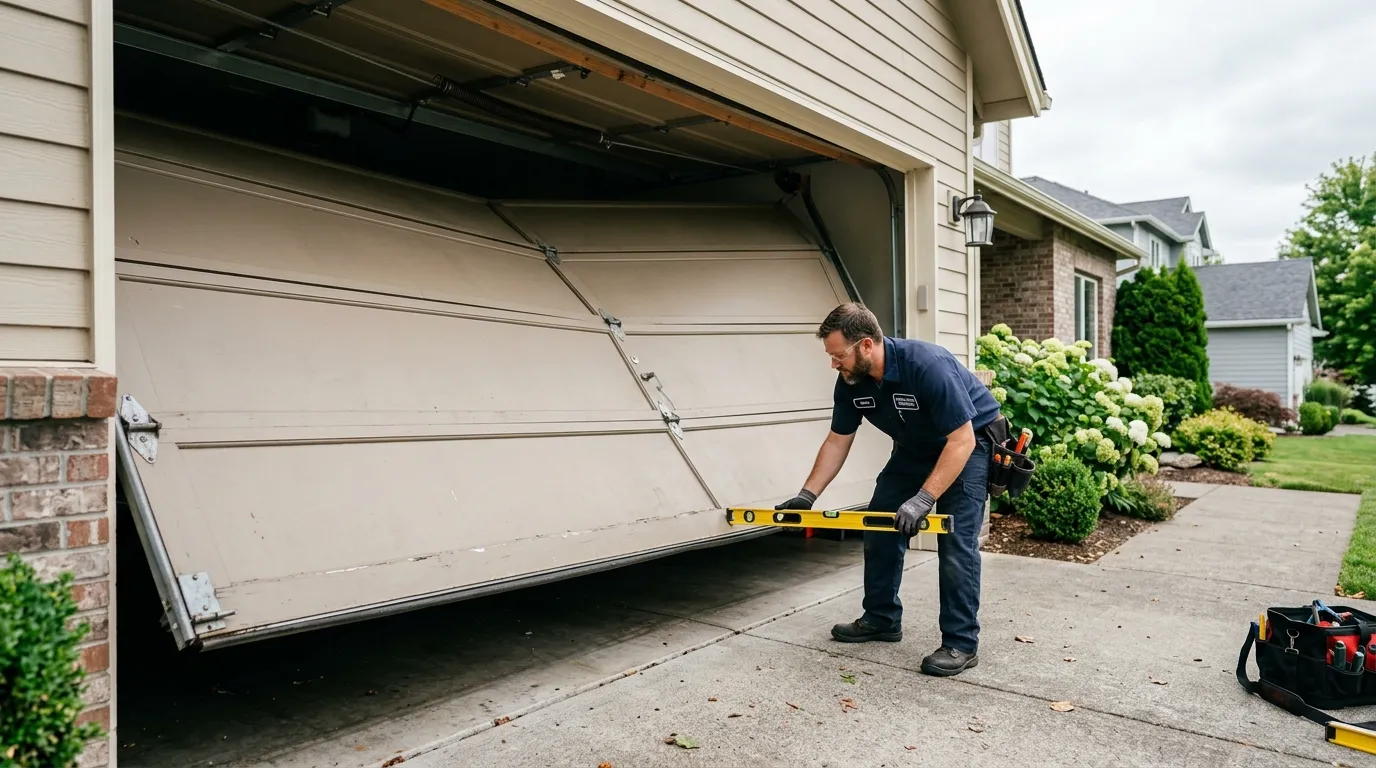
A door that's noticeably heavier on one side when you lift it manually, or that slams the last foot instead of settling, points to a spring that's lost tension relative to its pair, which on a 1980-era door usually means the spring has simply never been replaced.

Loud bang, door won't move

A loud bang followed by the door refusing to move at all is very often a broken torsion spring, and on hardware this old the second spring is usually close behind it, even if it hasn't gone yet.

Grinding, dried-out rollers

Rollers that grind or squeal instead of turning smoothly are typically the nylon originals, dried out and cracked from four decades of heat exposure in a climate that runs warm most of the year. A door fighting its own hardware puts extra strain on the opener motor too.

What Is on the Truck

On the truck

What Is on the Truck

For a neighborhood built out this early, we carry torsion springs across a wider range of wire gauges than you'd need for a subdivision built in the 2000s, since original doors here vary more in weight and spring specification than the standardized doors going into newer construction elsewhere in the area. We stock galvanized lift cable, replacement pulleys, and both steel and nylon rollers, because we don't know which era's parts we'll be pulling out until we're standing in front of the door. Photo-eye sensor kits come standard on the truck now, since so many of the openers we find on original 1980-vintage doors either lack them or have ones that no longer read reliably. What we don't carry is a stock of obsolete opener logic boards for units this old - if the opener itself has failed rather than a part in it, replacement is usually the faster and cheaper path, and we'll say so rather than order a part that may take weeks to source.

Questions

Common questions

Is my garage door opener too old to repair if it's original to the house?

If your opener dates to 1980, it likely predates today's required photo-eye safety sensors. We can sometimes retrofit those, but if the motor or logic board itself has failed, sourcing parts for a unit that old is often slower and pricier than replacing it outright. We'll check the specific unit before recommending either path.

Why does my spring keep breaking when the neighbor's door is fine?

Springs are rated by cycle count, not calendar years, and heat speeds up metal fatigue. A door on original 1980 hardware has had decades of Central Texas heat working against it even if it's opened less often than a neighbor's newer door. Age plus heat cycling, not usage alone, is usually what's wearing the spring down.

Do you have a branch in Lost Creek?

No. We're based in Austin and drive out to Lost Creek and the surrounding six-mile pocket for calls. We don't keep a local depot or promise a fixed response window for this specific area, but we do schedule a realistic arrival time before we head out.

Ready when you are

Need a garage door sorted in Austin?

Austin Garage Door Guys repairs and installs garage doors, springs and openers in Austin, TX and the surrounding area.

CallGet a quote