Barton Creek, Austin

Garage Door Maintenance for Barton Creek Homes

Maintenance built for Barton Creek's early-2000s doors: what a 7-mile call from Austin means for scheduling, and what actually wears out on newer torsion hardware.

Garage Door Maintenance for Barton Creek Homes in Austin
Same-day service in most cases
Serving Austin, TXBackground-checked techsHonest, upfront pricingFast local response

Downtime

How Long You Are Without the Door

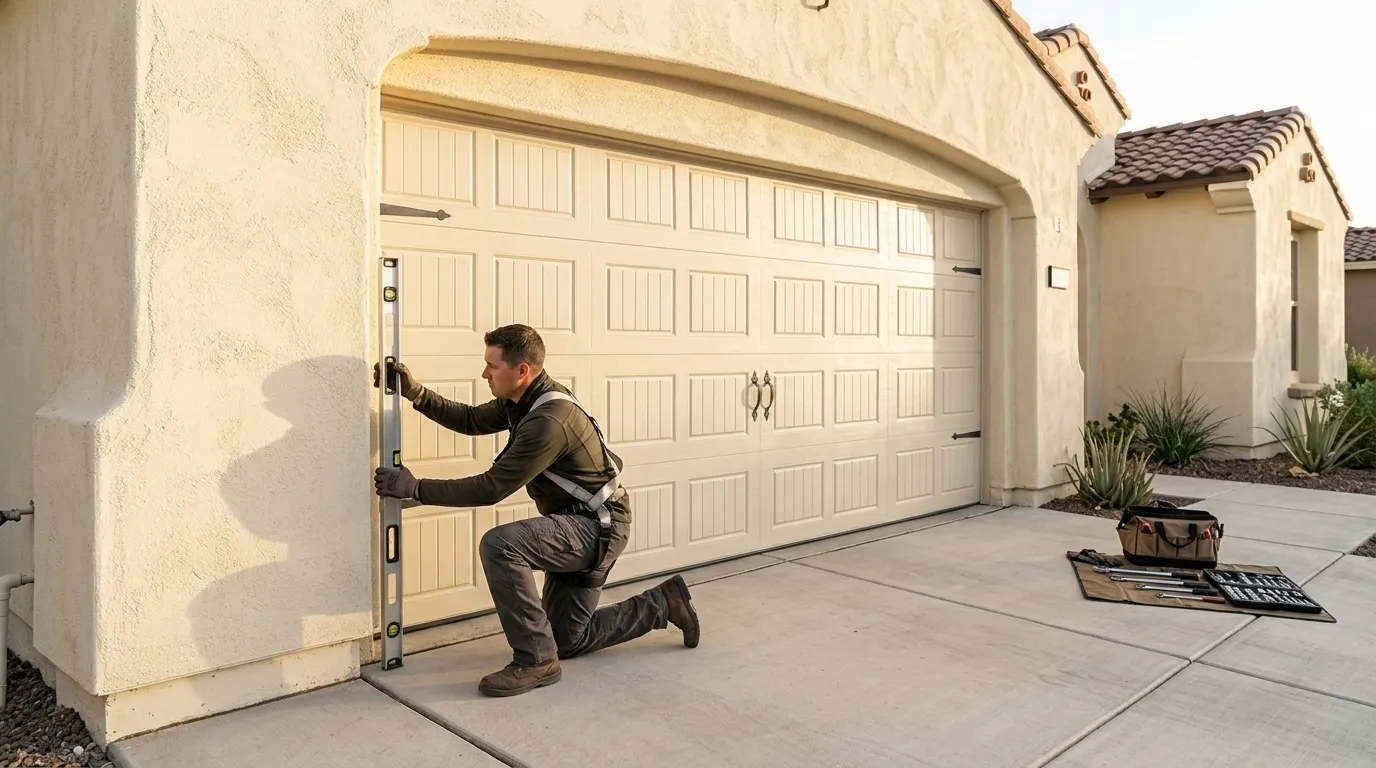
Barton Creek sits about seven miles from Austin, and that drive shapes how a maintenance call here actually runs. We're not stationed in the neighborhood, so a same-day visit means building the route around other stops between here and Austin, not showing up in twenty minutes. For a working door with a rough spot or a noisy roller, that's a scheduling detail, not a crisis - you tell us what's happening and we plan the visit for a day that works. For a door that's stuck shut or won't close, that changes the math, and we'll be upfront about where in the day we can realistically get there. The point of maintenance is to keep you out of that second situation. A door that gets its springs, cables, and hardware checked on a normal interval rarely fails on the one morning you need it most. Skipping that check doesn't save the seven miles later - it just moves the visit from a planned one to an emergency one, and emergency visits cost more in time no matter which side of the drive you're on.

How Long You Are Without the Door

Watch-outs

What Can Go Wrong

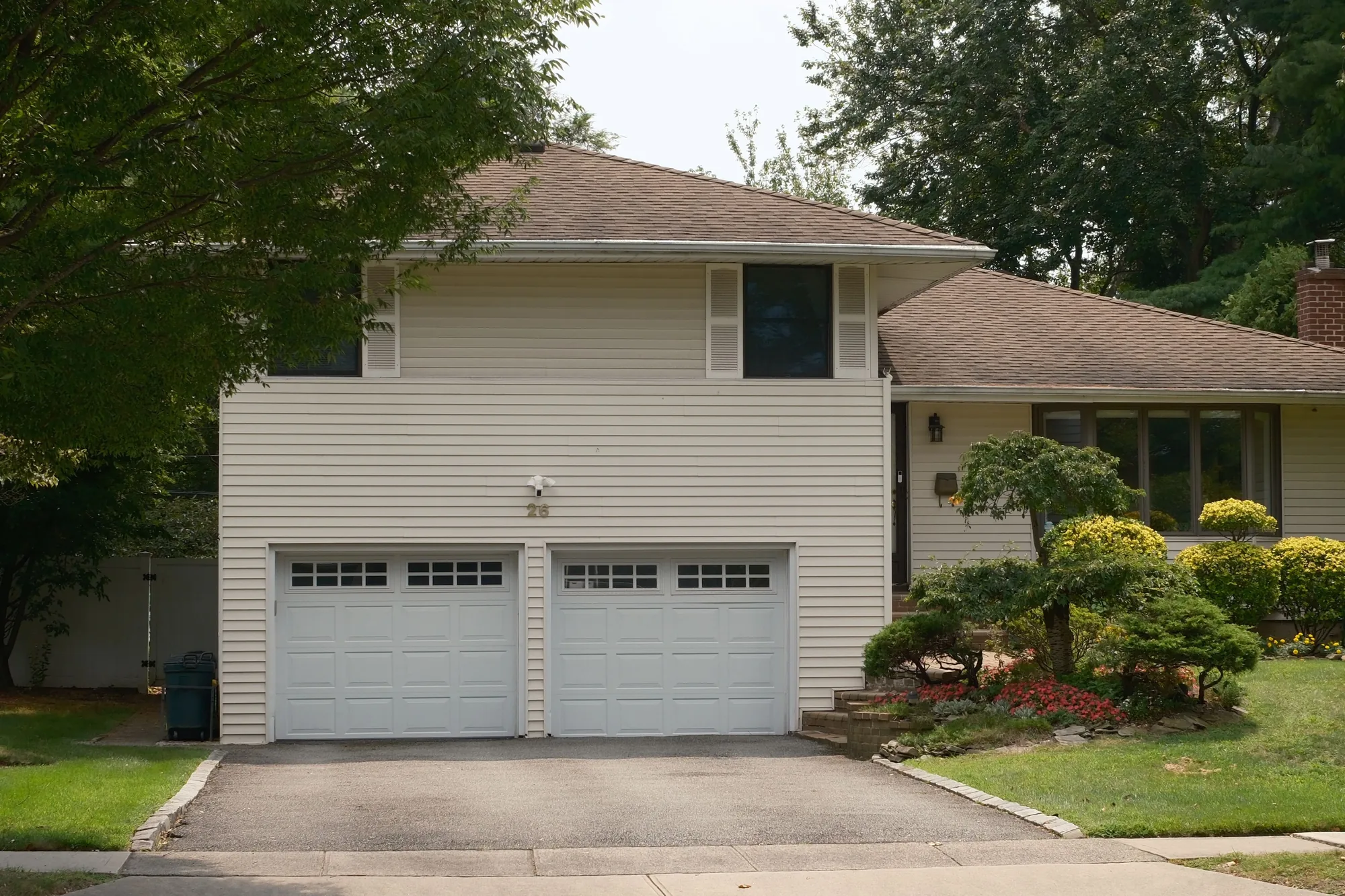
Barton Creek's homes were mostly built around 2002, newer than the 1980-2014 spread across the wider service area, which averages closer to 1998. That newer median matters because it determines exactly what wears out first, and on roughly what schedule, on doors installed at that time.

Springs losing tension gradually

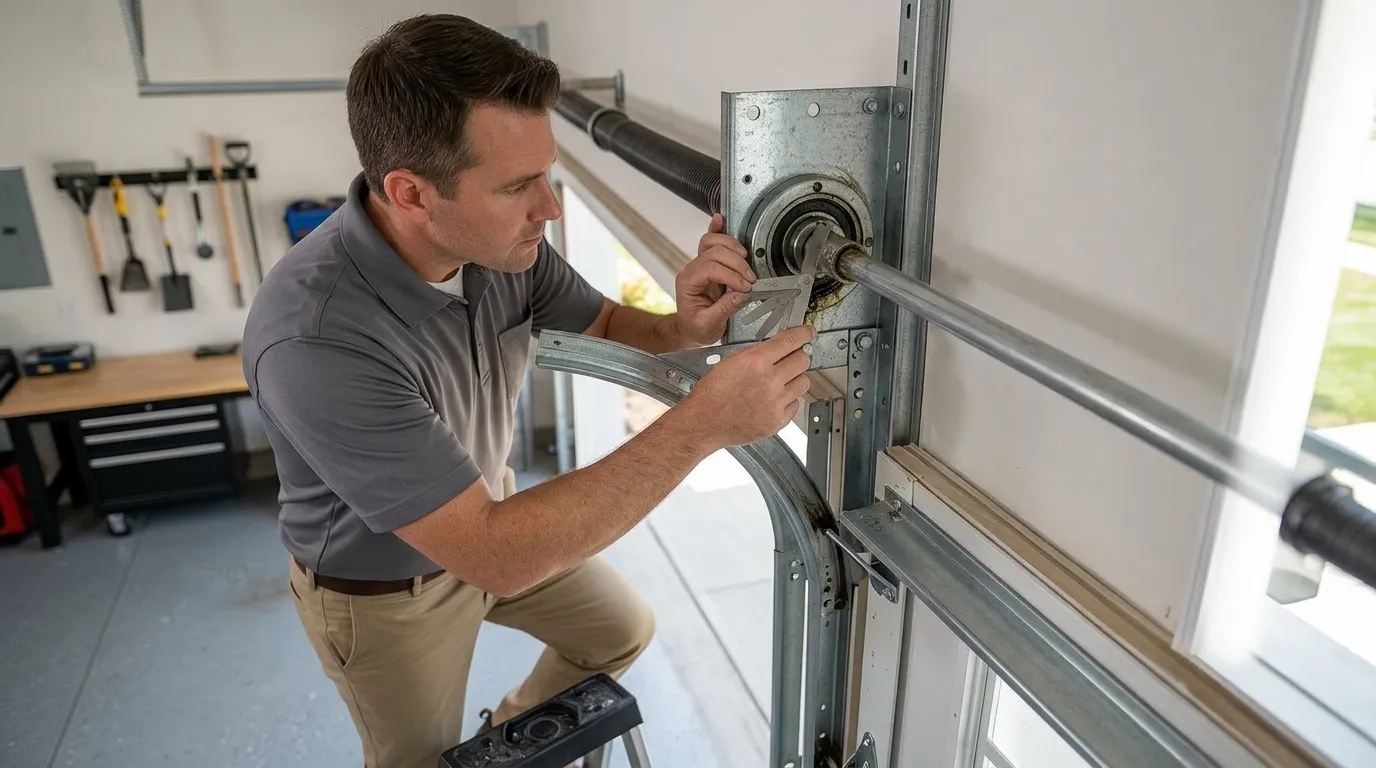
Doors from this era were almost all installed with torsion springs and steel rollers from the start, not the older extension-spring setups common in earlier subdivisions. Torsion springs lose tension gradually after 8-12 years of daily cycles, which is exactly the kind of wear a maintenance visit is built to catch early.

Cracked rollers, pinched sensor wiring

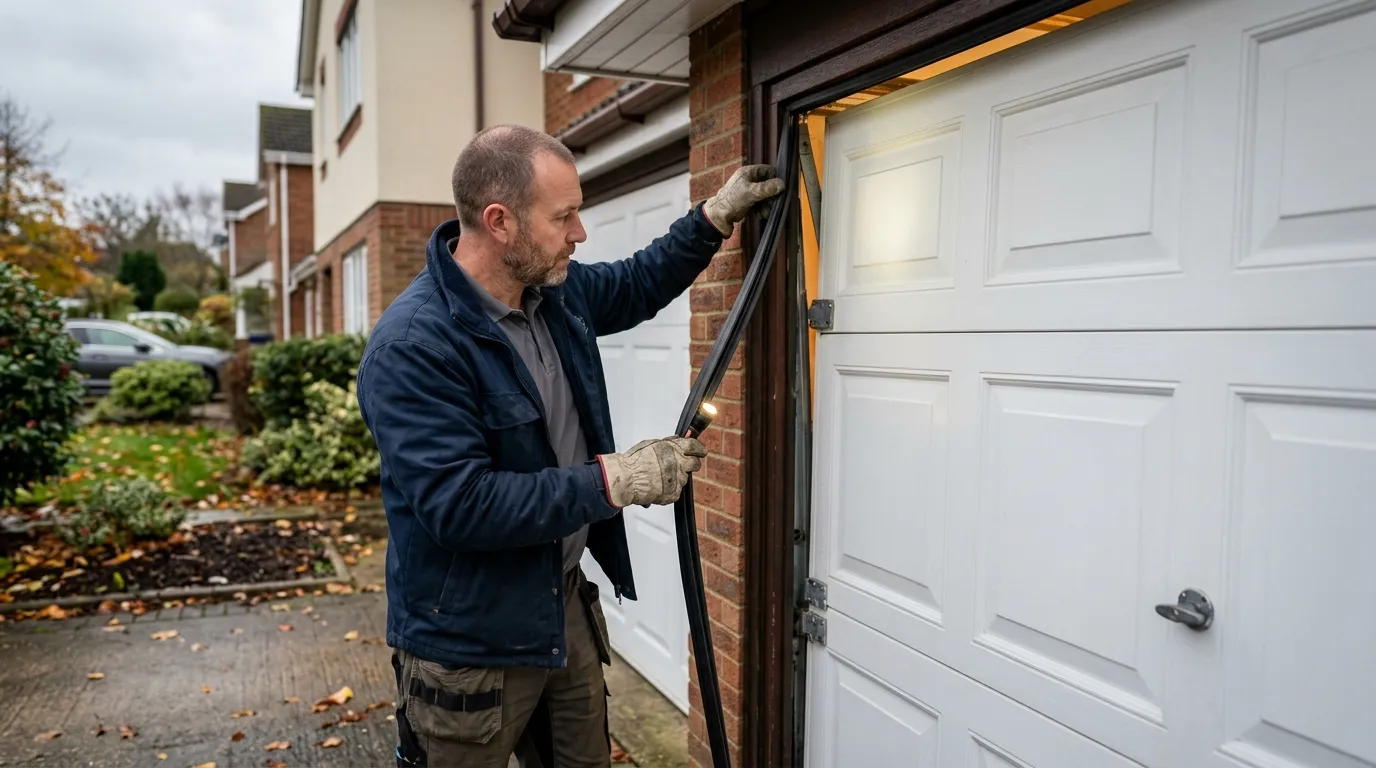
Nylon rollers crack and bind in their tracks over time, and the sensor wiring at the bottom of the track gets pinched or corroded from irrigation overspray. Both are slow, quiet failures rather than sudden ones, which is exactly why they're easy to miss until they cause a real problem.

Stripped gears, skipping logic boards

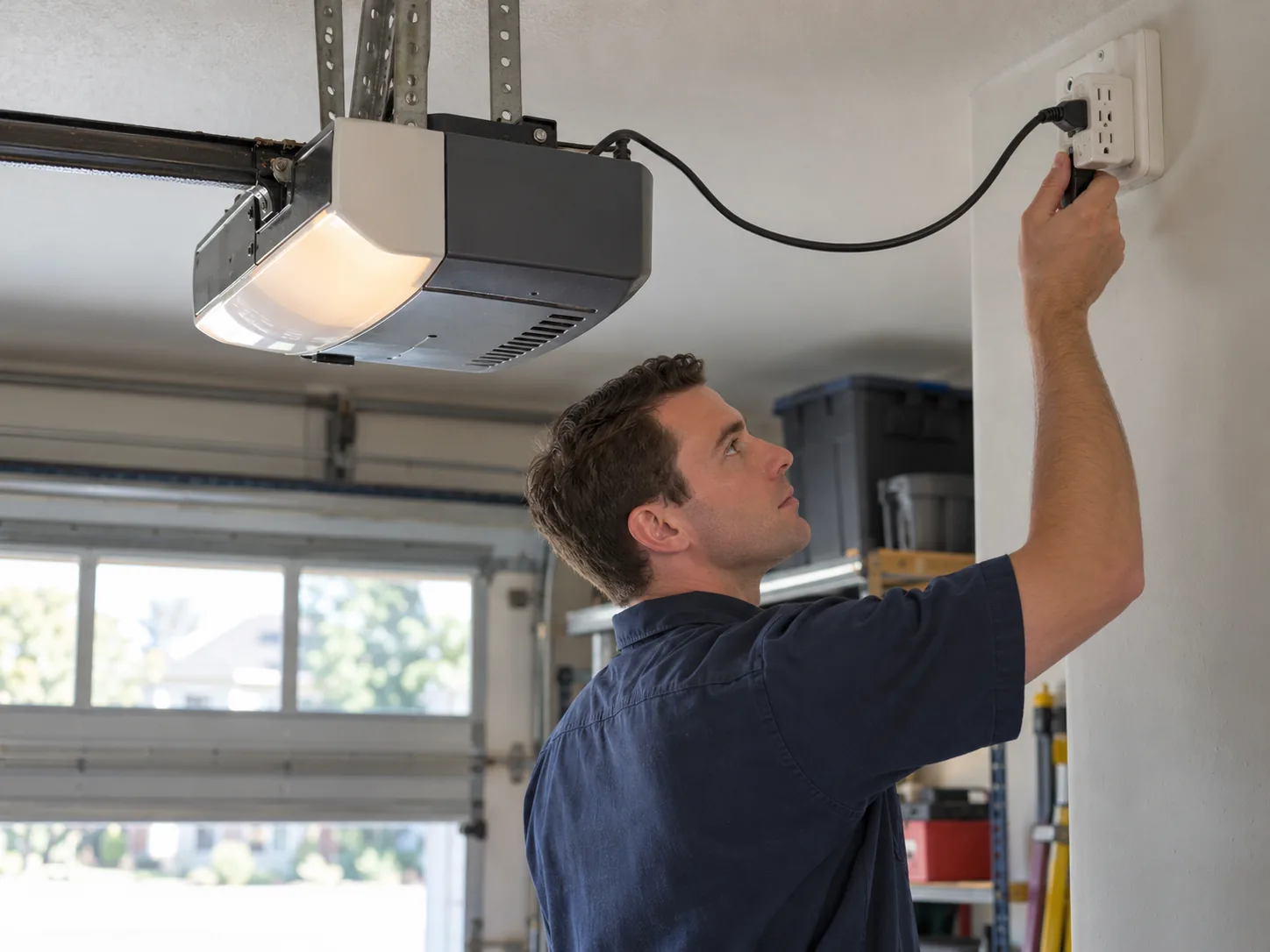
Openers from the early-to-mid 2000s are also reaching the point where drive gears strip or the logic board starts skipping signals intermittently, which reads to homeowners as a random malfunction rather than a wear part reaching its limit. It shows up as a slightly louder door, then a hesitant one, then a door that won't move at all.

On the truck

What Is on the Truck

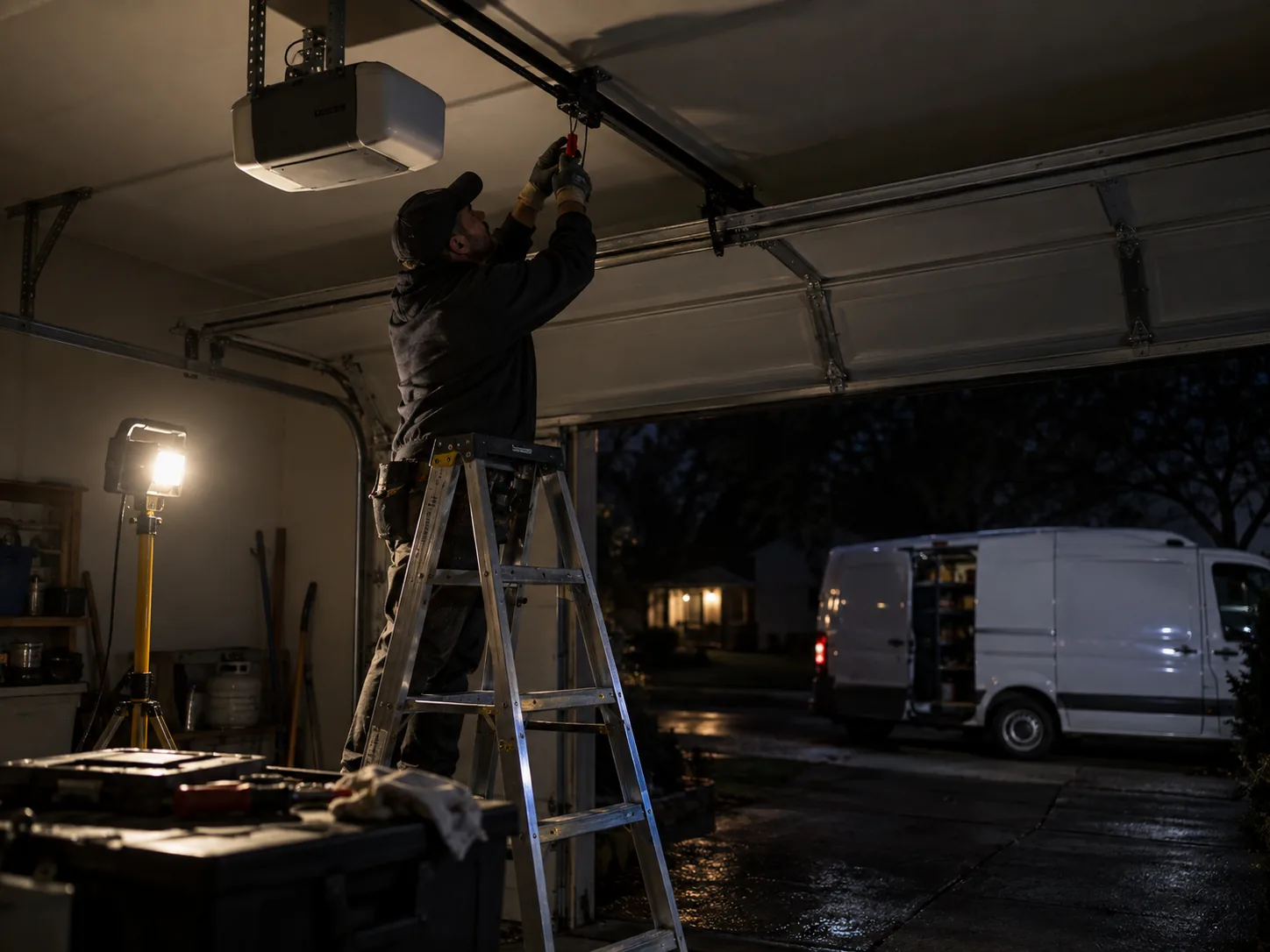
For a maintenance visit we bring what covers the parts that actually fail on doors this age, rather than loading the truck with everything that could theoretically go wrong. Here's what's on board for a standard visit, and the two things that are order-in items instead.

Springs, rollers & lift cables

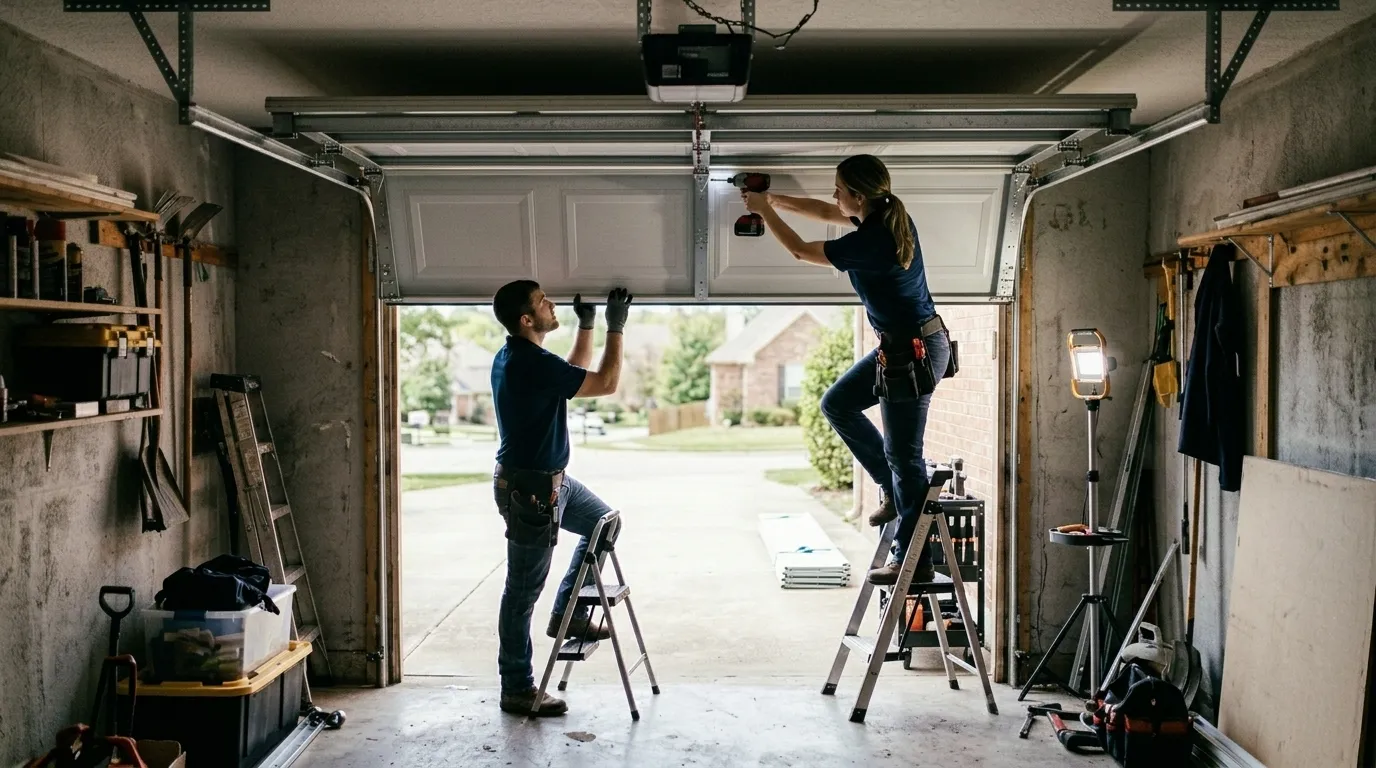
We bring torsion springs sized for standard residential doors, steel and nylon rollers, lift cables, and the small hardware - hinges, end bearings, center bearing plates - that wears out quietly. That covers the parts that actually fail on doors this age during a routine visit.

Climate-rated lubricant & sensors

We carry lubricant rated for the moderate heat this area sees, since the wrong grease gums up and attracts dust rather than protecting the moving parts. We also carry replacement photo-eye sensors and the low-voltage wire used to reseat or replace wiring that's been nicked or pinched at the bottom of the track.

Opener units & panels are order-in

What we don't carry on a standard maintenance run is a full opener unit or a made-to-order panel - those are order-in items with their own lead time. If a visit turns up a dead opener board or a bent panel, we'll tell you that on the spot rather than pretend it's a five-minute fix.

Why This Fails Locally

Local causes

Why This Fails Locally

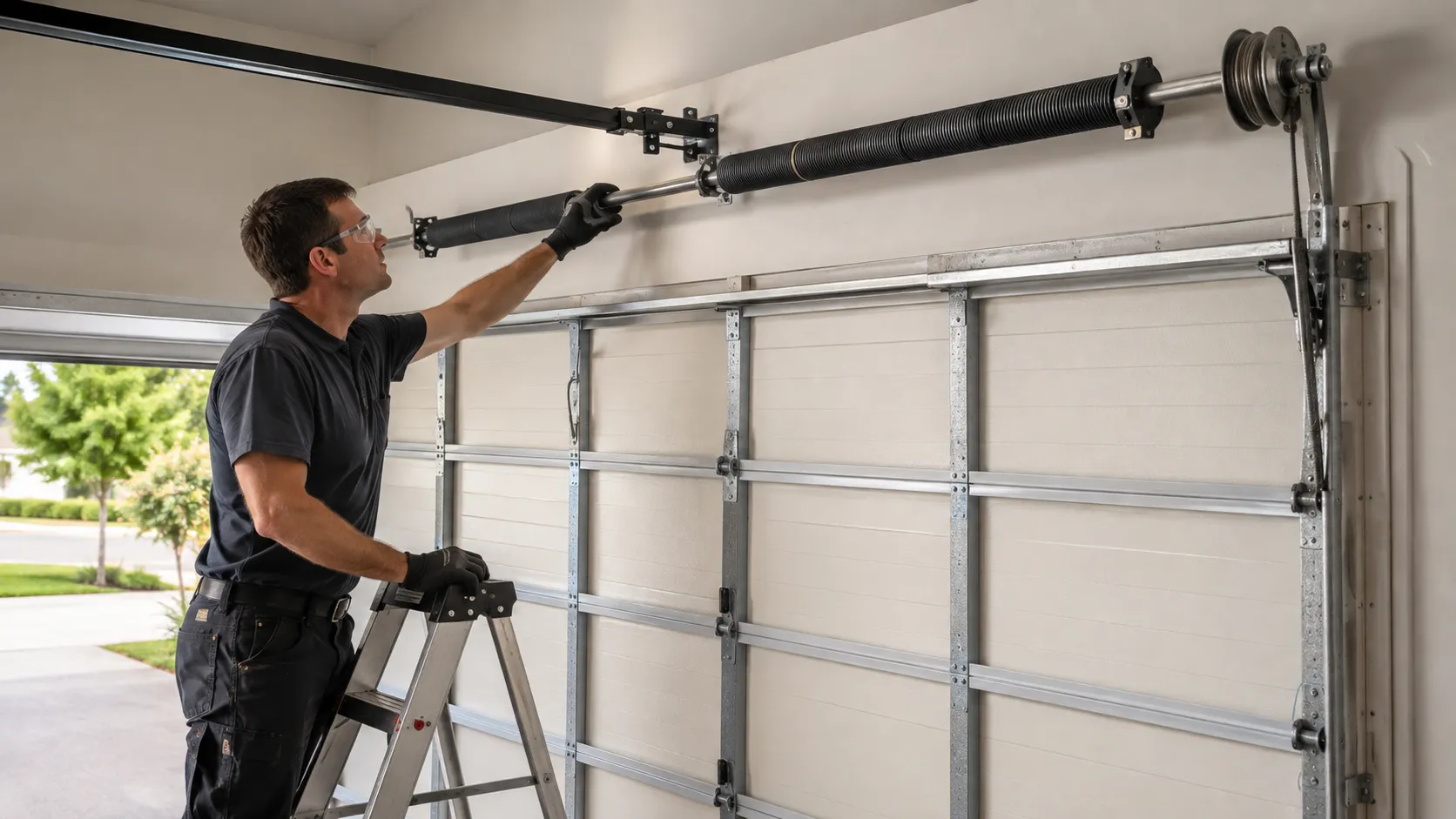
Households in Barton Creek report a median income of $193,971, well above the roughly $121,750 median across the broader service area, and that income level tends to show up in home size and finish - larger doors, sometimes insulated steel or wood-composite panels rather than base builder-grade steel. Bigger, heavier doors put more load on the torsion spring and the opener's drive system, so a spring sized for a standard door, or an opener rated for a lighter panel, wears out faster here than it would on a smaller door elsewhere. That's a mechanical fact, not a neighborhood stereotype: the door has to lift what it weighs, and heavier panels mean the spring tension and opener horsepower matter more, not less. It also means a maintenance check needs to actually measure spring tension and opener load rather than eyeball it, because a door that looks fine from the driveway can be running its opener past what it's rated for.

Warning signs

What You Are Seeing

If your door is from the early 2000s build-out common in Barton Creek, the signs to watch for are specific to hardware this age. None of these need a same-day emergency call if you catch them early, but none of them get better on their own either.

Shuddering or jerking travel

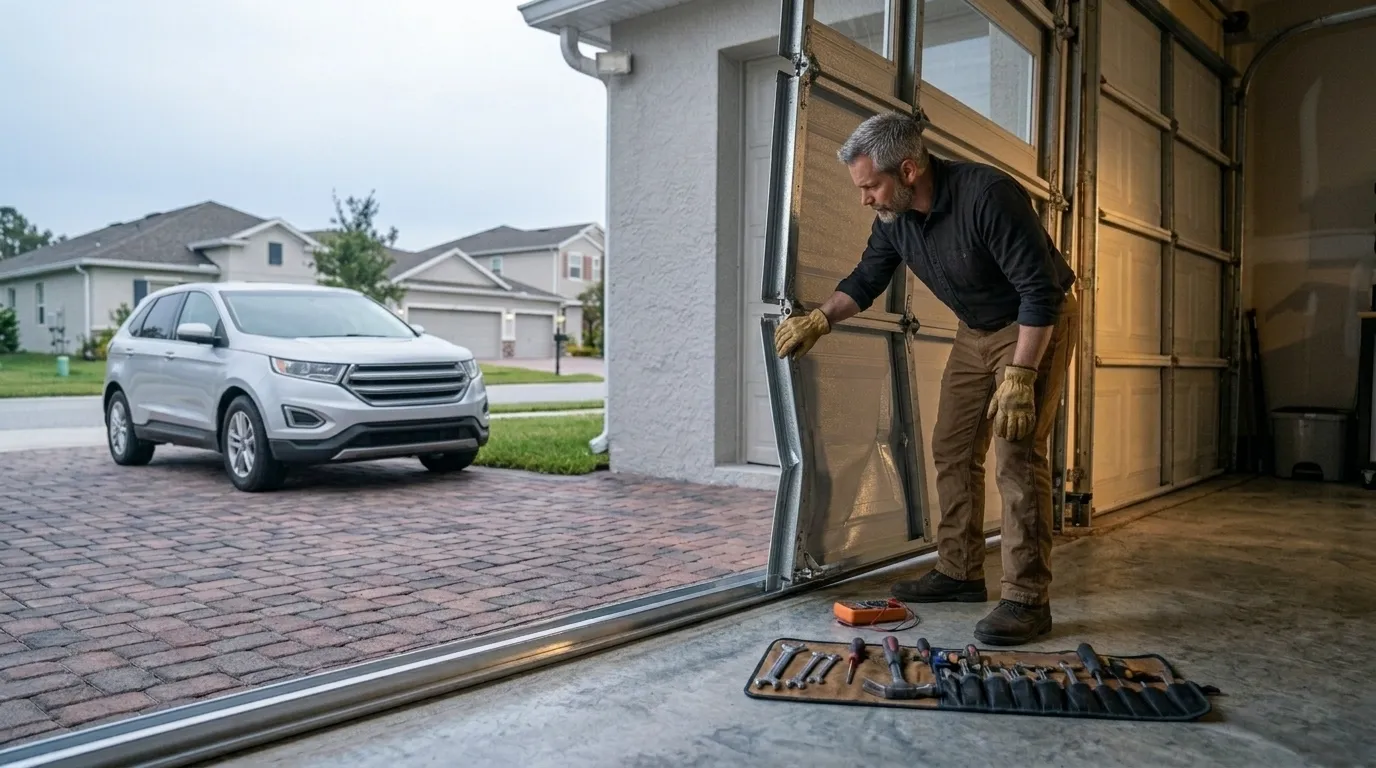
A door that shudders or jerks partway through its travel usually means a roller has cracked or a track bracket has loosened. Neither one is an emergency on its own, but both get worse the longer the door keeps cycling against them.

Reversing before it closes

A door that reverses on its own before touching the floor is almost always a misaligned or dirty photo-eye sensor near the bottom of the track. A grinding or scraping sound at the top of the door's travel points to a worn bearing plate, not the opener itself.

Opener runs, door barely moves

An opener that runs but the door barely moves is a spring that's lost tension - the motor is doing work the spring used to help with. It will keep straining until either the spring lets go or the drive gear strips, so it's worth catching early.

DIY or pro

Doing It Yourself

There's real maintenance you can do yourself, and doing it on a regular schedule catches most problems long before they become a stuck door. Here's what's safe to check on your own, and where the line sits once a torsion spring might be involved.

  1. Wipe down tracks & rollers

    Wipe down the tracks, check that the rollers spin freely by hand, listen for new sounds, and keep the area around the photo-eye sensors clear of dust and spiderwebs. This takes just a few minutes and catches most early wear before it gets worse.

  2. Leave the torsion spring alone

    What you shouldn't do is touch the torsion spring. It's under enough tension to cause serious injury if it releases, and on a heavier insulated door - more common in this price range - that tension is higher than on a standard builder door.

  3. Don't cycle a suspect noise

    If you're not sure whether a noise is a roller or a spring, don't guess by running the door repeatedly to hear it again. That just adds cycles to a part that may already be near the end of its life.

  4. Do a monthly visual check

    A five-minute visual check monthly does more good than any amount of troubleshooting once something's already wrong. Catching a cracked roller or a loosening bracket early is what keeps a maintenance visit from turning into an emergency one.

Questions

Common questions

How far out is Barton Creek from your Austin base, and does that affect scheduling?

It's about seven miles. It doesn't change what we do on a maintenance visit, but it does mean we schedule these as planned appointments built into a route rather than instant drop-ins - which is fine for maintenance, since it's not an emergency call by nature.

Are Barton Creek garage doors different from older Austin neighborhoods?

Mostly, yes. Homes here were built around a median year of 2002, newer than much of the wider service area's 1980-2014 stock. That means torsion spring setups from the start rather than the older extension-spring hardware you'd find in earlier-built neighborhoods.

Do bigger or heavier doors need more frequent maintenance?

Yes. Heavier insulated or wood-composite panels put more strain on the torsion spring and opener than a standard steel door does. If your door is on the larger or heavier end, tighter maintenance intervals catch spring wear before it becomes a stuck-door call.

Can I replace my own torsion spring to save time?

No. Torsion springs hold enough tension to cause serious injury, and it's worse on heavier doors. This is one job we always send a tech for - everything else on your side, like checking rollers or clearing the sensor area, is safe to do yourself.

Ready when you are

Need a garage door sorted in Austin?

Austin Garage Door Guys repairs and installs garage doors, springs and openers in Austin, TX and the surrounding area.

CallGet a quote