Barton Creek, Austin

Emergency Garage Door Repair for Barton Creek Homes

Barton Creek homes went up mostly after 2002, meaning newer torsion hardware and factory openers. Here's what actually breaks and what the truck carries out to fix it.

Emergency Garage Door Repair for Barton Creek Homes in Austin
Same-day service in most cases
Serving Austin, TXBackground-checked techsHonest, upfront pricingFast local response

Downtime

How Long You Are Without the Door

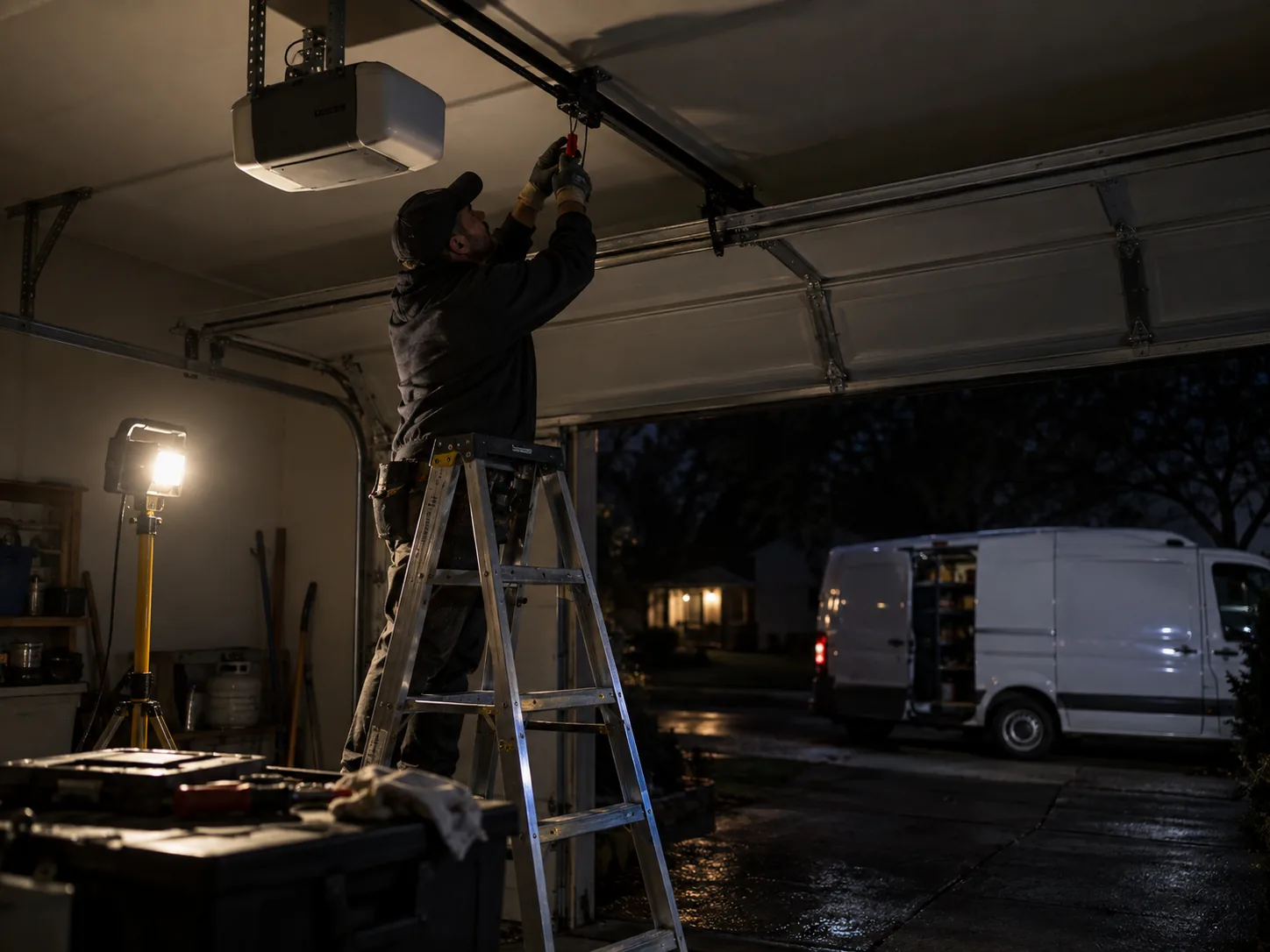
Barton Creek sits about 7 miles from where the truck starts its day, so the honest answer is: it depends on where the call falls in the route, not on a fixed number we can promise in writing. What we can tell you is that a house built around 2002, which is the median year for this area, almost never needs a special-order part. The steel sections, torsion springs, and openers common to that build era are still in normal production, so once the truck arrives the fix itself is usually quick - it's the drive time that adds the variable, not the parts hunt. Older stock elsewhere in the region sometimes needs a day or two for an odd-width spring or a discontinued track bracket. That's not the situation here. With roughly 1,438 households in this pocket, most doors are close enough in age and spec that one van stocked for a 1990s-through-2010s range covers nearly everything we're likely to find on a given call.

How Long You Are Without the Door

Watch-outs

What Can Go Wrong

Doors from the early 2000s in this area typically run a single torsion spring on a 16-foot double door rather than the two-spring setup common on older or heavier doors, and that difference shapes which parts fail first. Here's what actually breaks on hardware from this build era, and how each failure tends to show up.

Single spring failure

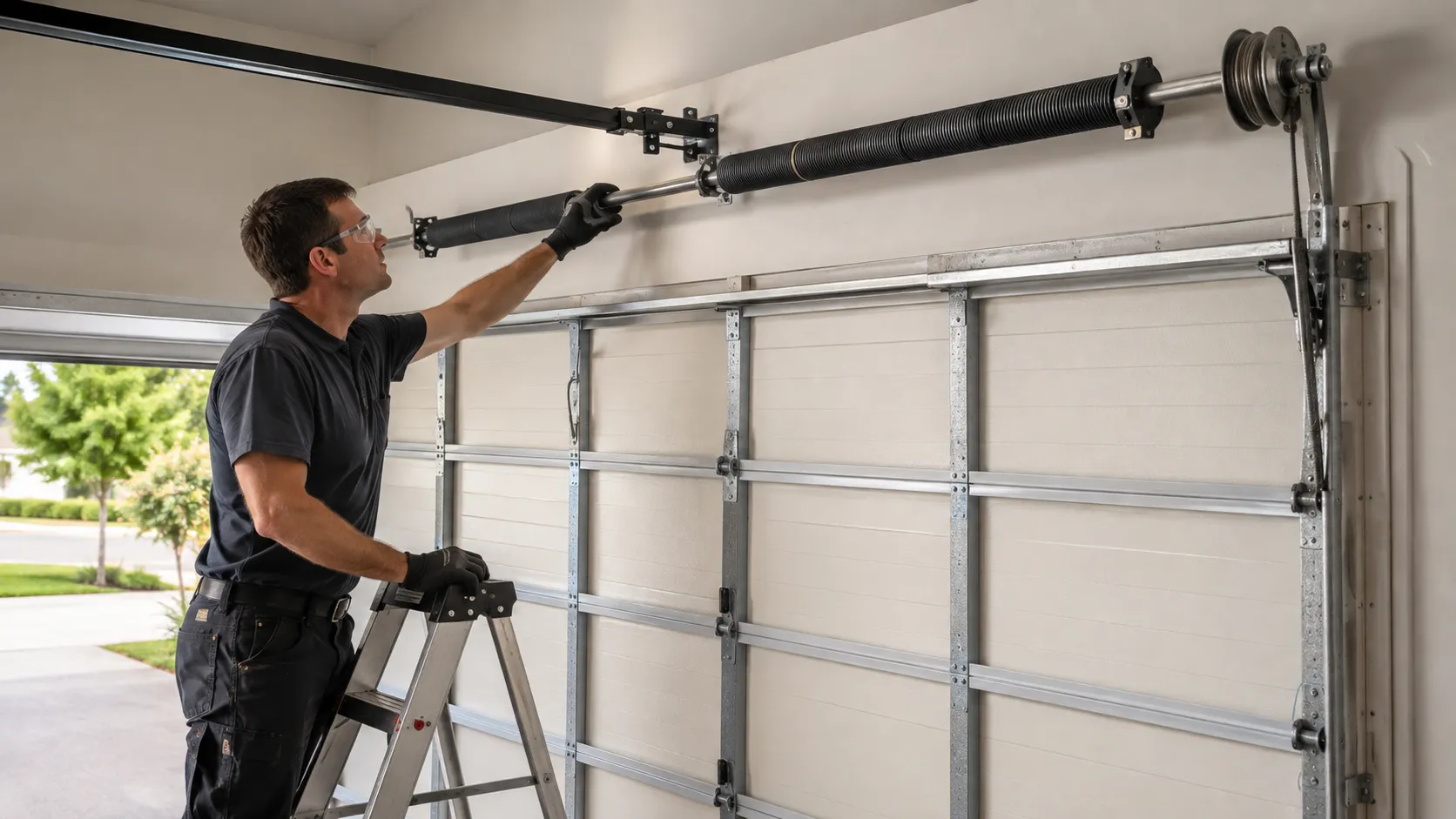
Doors from the early 2000s in this area typically run a single torsion spring on a 16-foot double door rather than the two-spring setup common on older or heavier doors. A single spring under that kind of load fails hard and fast, and when it goes, the door either won't move at all or drops hard on one side.

Worn rollers & drifting sensors

Nylon rollers from that build era wear out and start binding in the track, especially on doors cycled daily, which shows up as noise and hesitation before anything actually stops working. Photo-eye safety sensors, standard on everything built after 1993, go out of alignment from a bumped ladder or a shifted bracket, and the opener refuses to close - which reads to most owners as a broken door when it's really a two-minute sensor fix.

Worn opener drive gears

Chain-drive and belt-drive openers from this window also develop worn drive gears after enough years of cycling, and that's a different repair than a spring job entirely. The motor keeps running, but the gear connecting it to the door has stripped enough teeth that lifting power drops off or disappears.

On the truck

What Is on the Truck

For a service area where the median build year lands around 2002, the truck is stocked to match what that era actually needs rather than carrying a little of everything. Here's what's on board for a standard call, and the one category of hardware that isn't.

Springs, rollers & sensors

The truck carries torsion springs sized for standard 16-foot and 9-foot residential doors, replacement steel rollers, and photo-eye sensor pairs, since those cover the bulk of failures on doors built around the 2002 median for this area. Drive gear kits for the chain and belt openers common in that era ride along too.

Cable & bottom brackets

We also carry cable and standard bottom brackets, since cable failure on a door this age is usually ordinary wear rather than a manufacturing defect. Having both on the truck means a frayed or snapped cable is almost always a same-visit fix rather than a return trip.

The pre-1980s exception

What we don't carry as standard stock is anything for pre-1980s hardware, like side-mounted torsion on wood doors, because that setup is rare in this pocket of the service area. We'd rather order the right part than force a mismatched one onto an old header.

Why This Fails Locally

Local causes

Why This Fails Locally

With a median household income near $193,971 in this area, most of these garage doors are original to construction rather than a budget swap done later, which means the hardware failing is the hardware the builder put in around 2002 - not a patchwork of later repairs. That matters because it narrows what we're troubleshooting: original torsion spring, original opener logic board, original roller set, all aging on roughly the same clock. Central Texas heat is rated moderate for this service area, which is easier on doors than a harsher climate, but it still means grease dries out on rollers and hinges faster than a cool-climate spec would predict, and a door that's never been lubricated in twenty-some years is a door with a spring working harder than it should.

Warning signs

What You Are Seeing

If the door won't budge and the opener motor hums without moving anything, that's almost always a broken torsion spring - and on a single-spring 16-foot door built in this era, that's the most common single call we get from this part of the service area.

Door won't budge

If the door won't budge and the opener motor hums without moving anything, that's almost always a broken torsion spring. On a single-spring 16-foot door built in this era, that's the most common single call we get from this part of the service area.

Reverses or won't close

If the door reverses right after touching the floor, or won't close at all with the light blinking, check the photo-eye sensors first - a knocked bracket is far more common than a bad opener board, and it's a check that takes only a minute or two.

Shuddering or grinding

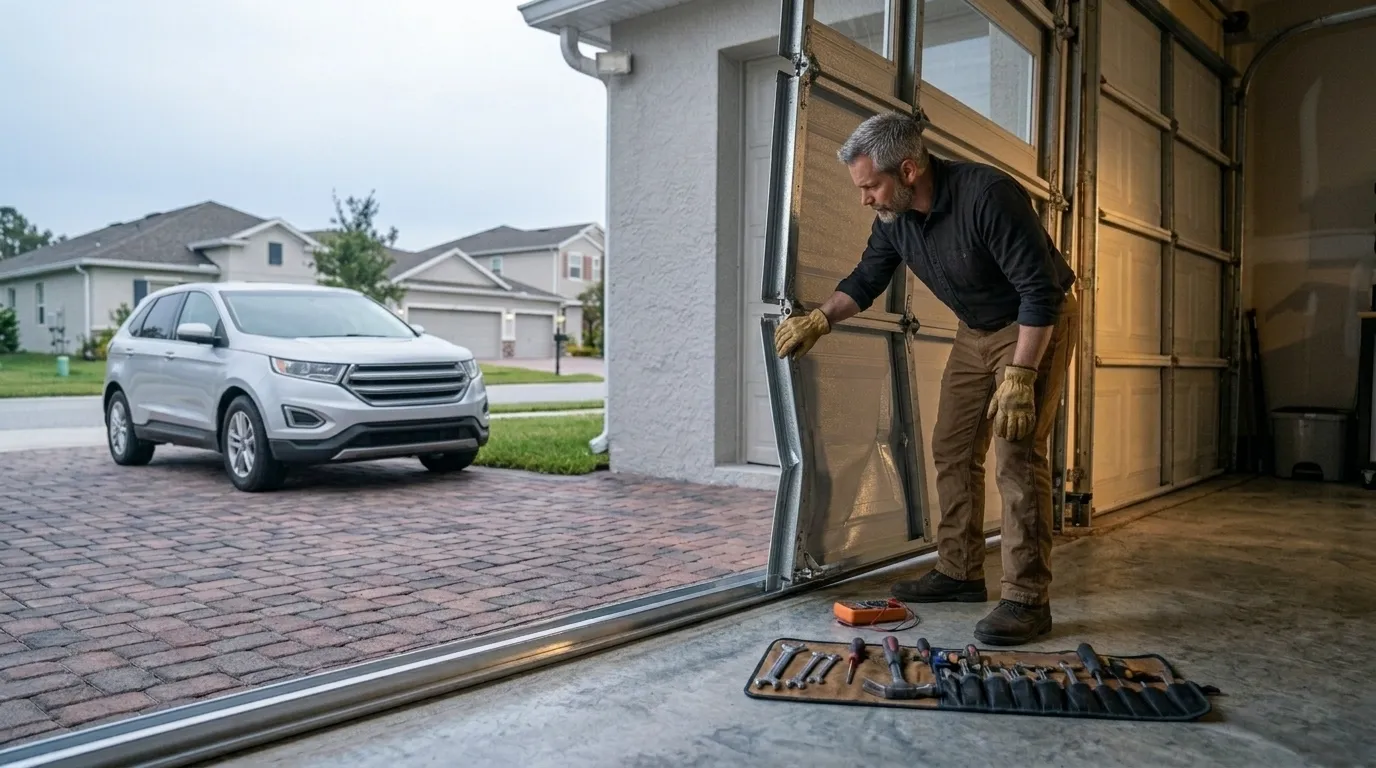
A door that shudders or jumps partway through its travel usually points to a cracked roller or a track that's pulled slightly out of alignment, not a spring problem at all. Grinding or scraping on the way up, without binding, is often just dry hinges rather than anything urgent.

DIY or pro

Doing It Yourself

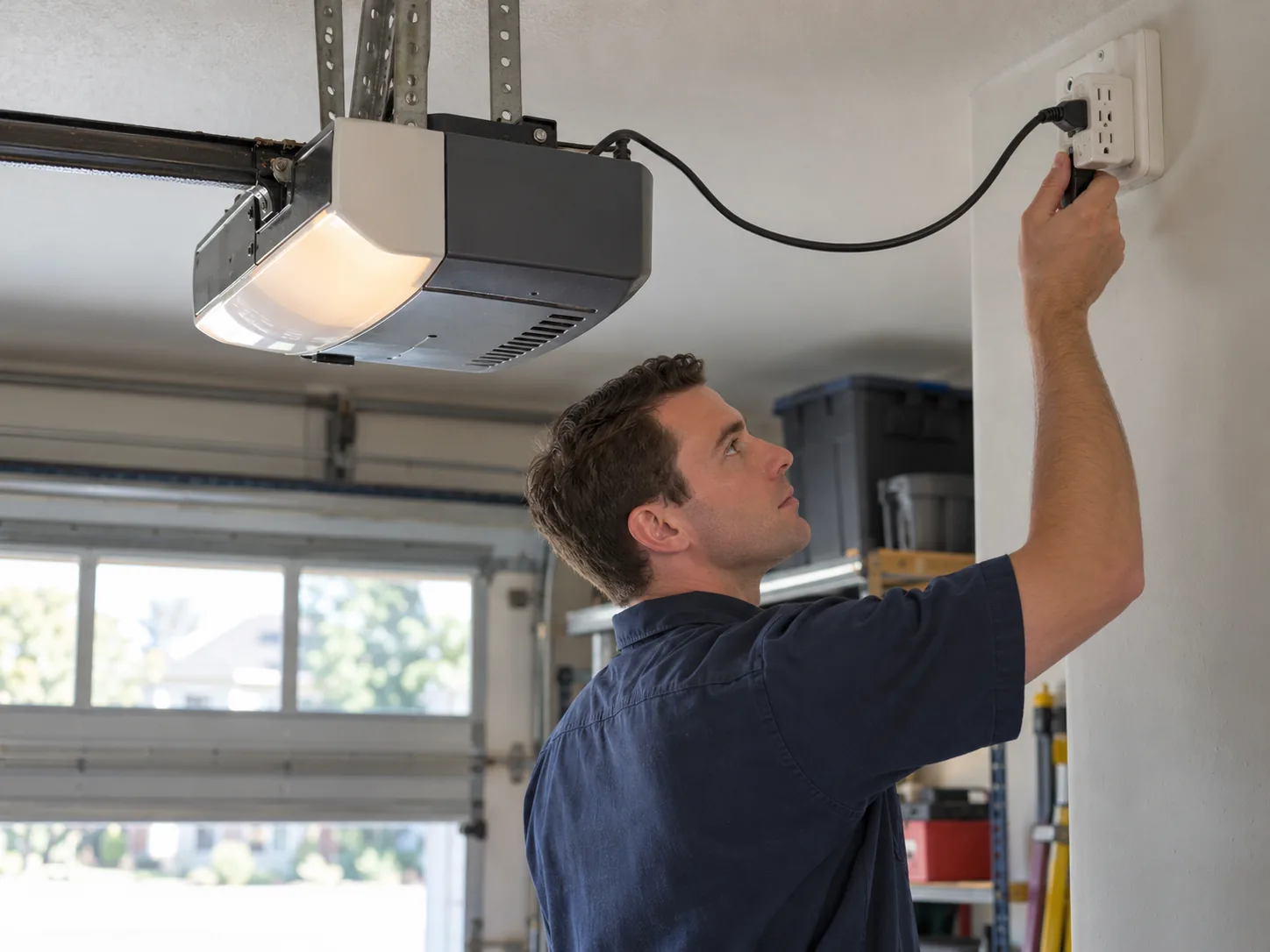
Realigning a photo-eye sensor and lubricating hinges and rollers are both safe, routine jobs you can handle yourself. Here's exactly where that DIY line sits, and why the torsion spring itself is the one part of an emergency call you should never attempt alone.

  1. Realign the photo-eye sensor

    Realigning a photo-eye sensor is safe to try yourself - loosen the bracket screw, nudge it until the light goes solid, and you're done. It's a two-minute fix that solves a surprising share of the calls that first look like a broken door.

  2. Lubricate hinges and rollers

    Lubricating hinges and rollers with a garage-door-specific spray is also fine as routine upkeep, and doing it regularly cuts down on the noise and wear that eventually turn into a bigger repair. This is maintenance you can do on your own schedule.

  3. Leave the torsion spring alone

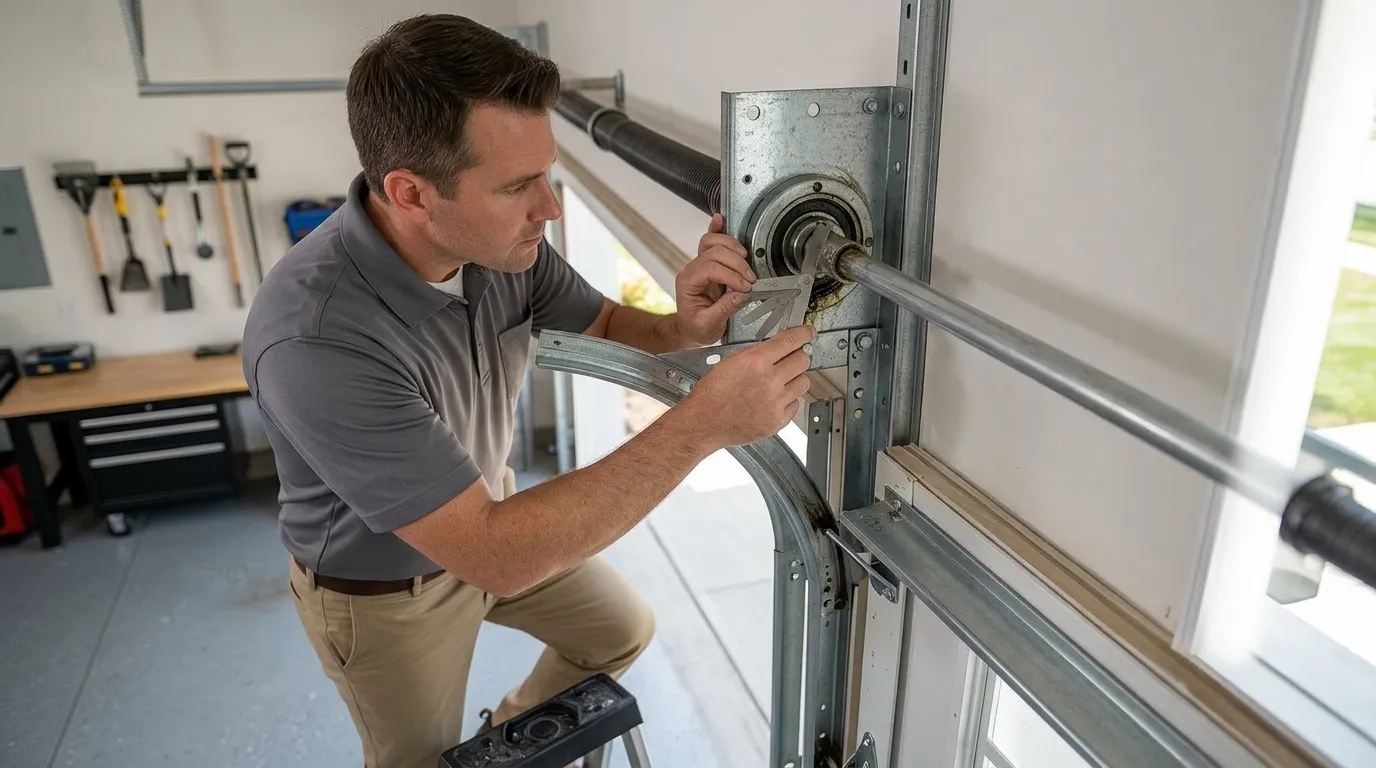
    What you should not touch is the torsion spring itself. It's wound under enough tension to cause a serious injury if the winding cone slips, and that's true whether the door is five years old or twenty years old.

  4. Call when you're not sure

    If the spring's broken, or you're not sure whether what you're looking at is a spring problem or a cable problem, that's the point to call rather than guess. A wrong move on a wound spring is not a repair you get to redo.

Questions

Common questions

Why don't older-style double springs show up on Barton Creek doors?

Most homes in this area were built around 2002, and by then a single, correctly sized torsion spring was standard for a 16-foot double door. Two-spring setups are more common on heavier or older doors elsewhere in the region. It's a build-era difference, not a quality difference.

Does the distance from Austin affect how fast you can get here?

Barton Creek is about 7 miles out, and travel time depends on where the truck is in the day's route rather than a fixed radius rule. We don't quote a guaranteed arrival window here, but the drive itself is short relative to other parts of the service area.

Is a 2002-era opener worth repairing or should it be replaced?

If it's a drive gear or sensor issue, repair almost always makes sense - those parts are still stocked and the fix is straightforward. If the motor itself is failing on a unit that old, replacement often costs about the same as a major repair and gets you a warranty on top.

Ready when you are

Need a garage door sorted in Austin?

Austin Garage Door Guys repairs and installs garage doors, springs and openers in Austin, TX and the surrounding area.

CallGet a quote