Houses on These Streets
We don't have the specific street names for MLK-183, and we're not going to pretend otherwise by inventing them. What we can speak to is the era, and the era does most of the talking anyway.
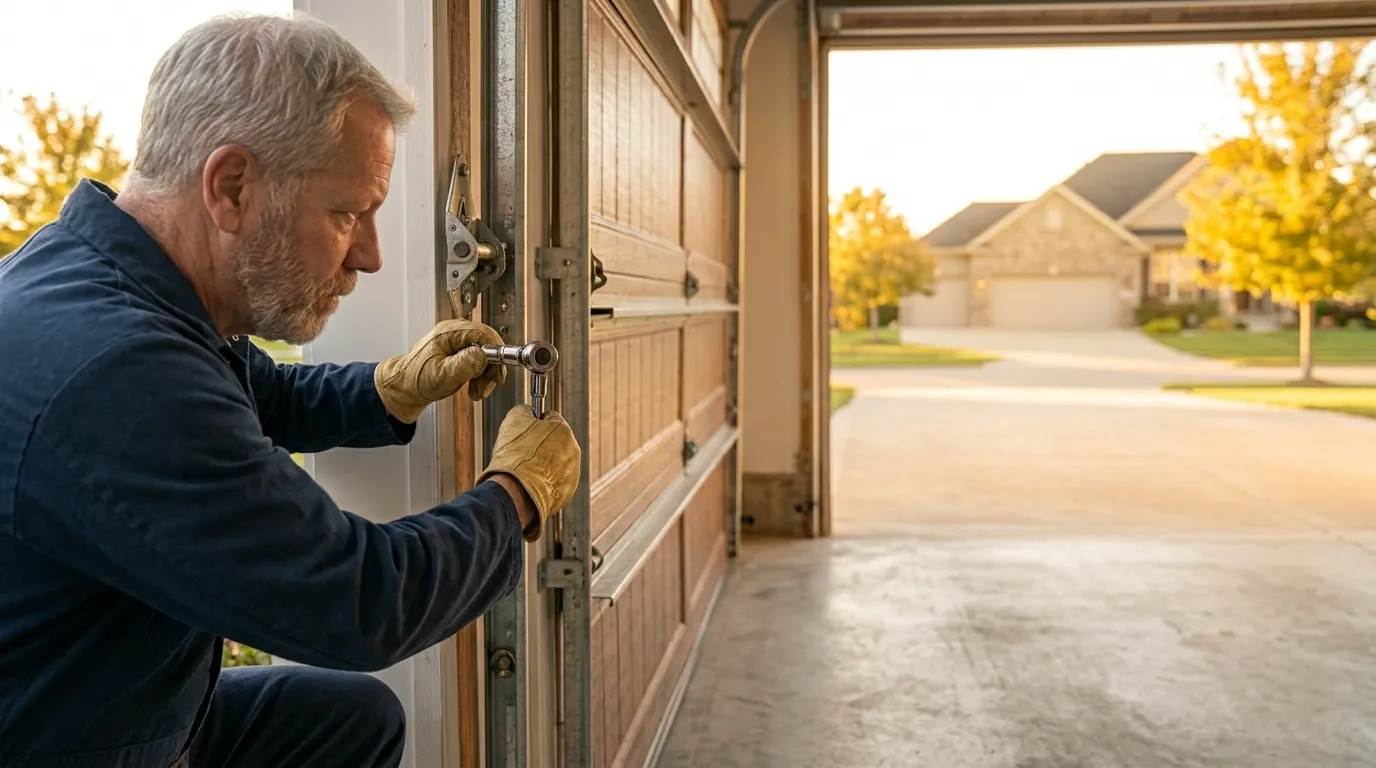
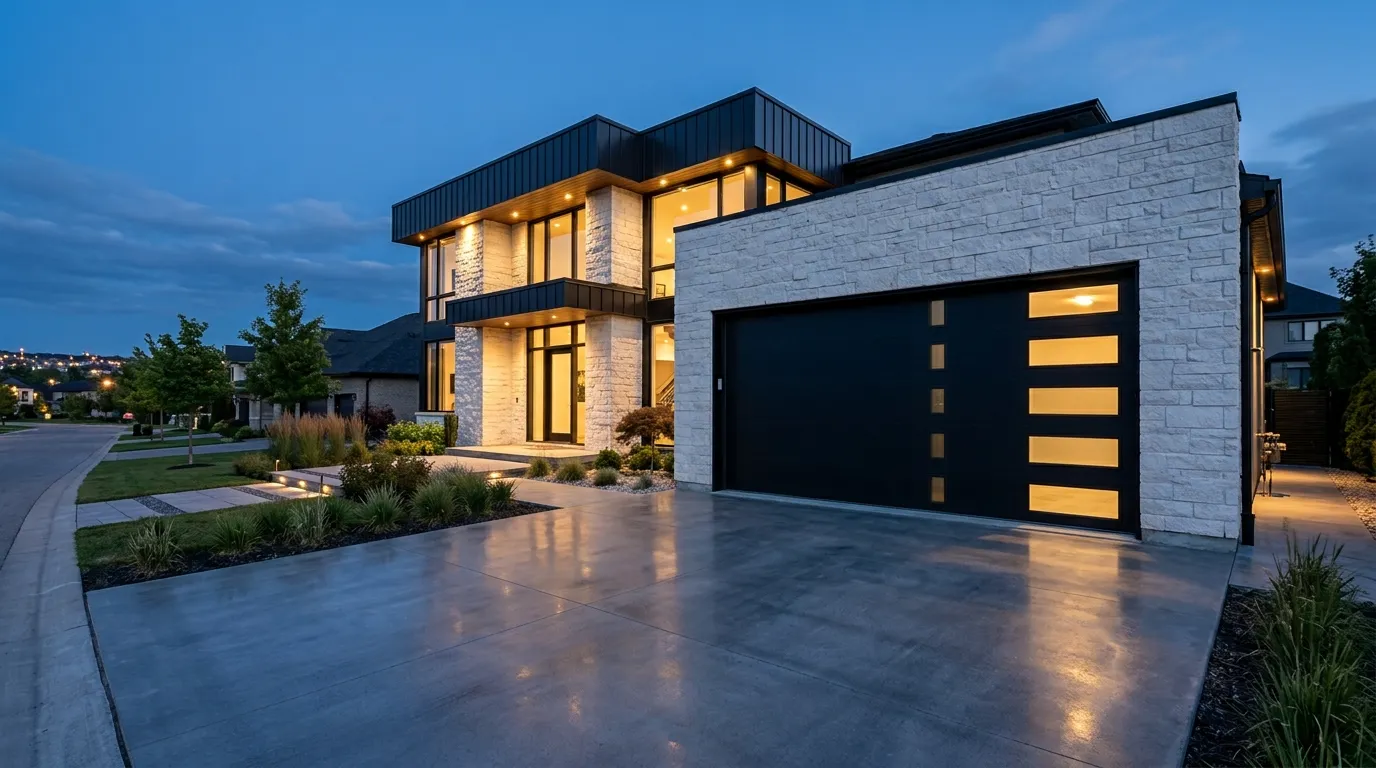
Homes built in the 1980-2014 window that makes up most of this corridor's stock tend to fall into two camps. The older end, closer to 1980s construction, usually still has the original torsion spring setup and a steel door that's taken four decades of Austin heat cycling - expansion and contraction that eventually shows up as warped panels or a track that's shifted out of plumb. The newer end, built closer to 2014, is more likely running a properly insulated door and a belt-drive opener that's still under its original hardware but is due for a spring service regardless, since torsion springs are rated by cycle count, not calendar years.
One honest limitation: if a door on this stretch is original to a mid-90s build, the exact spring size and drum combination sometimes isn't something we can quote over the phone. That's a look-at-it-in-person job, not a guess-from-a-photo job, because the wrong spring on an old track setup is a safety problem, not just an inconvenience.
Getting Someone Out to See It
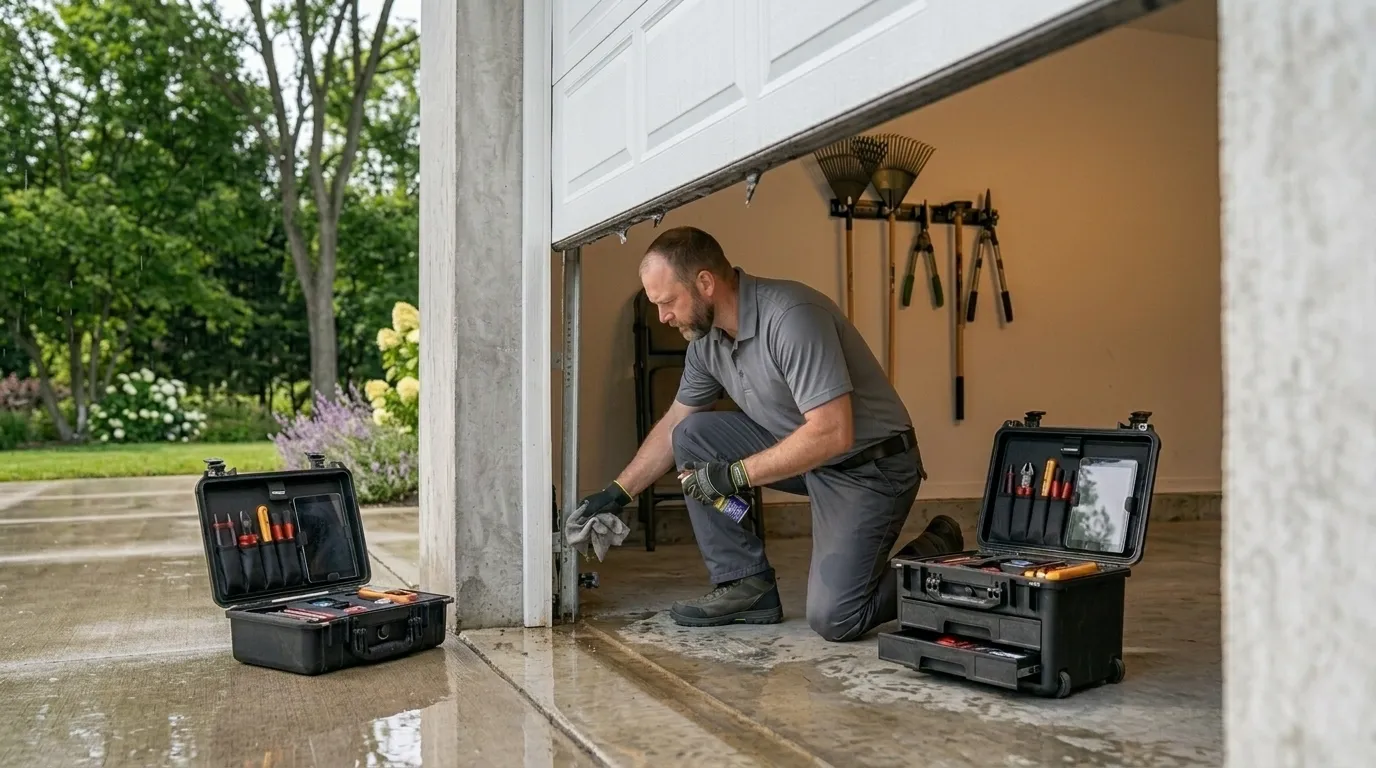
Given the age of hardware common to this corridor, a phone quote on anything spring-related is a starting point, not a final number. We'd rather tell you a range and confirm it on site than lock in a price against a torsion setup we haven't put hands on.
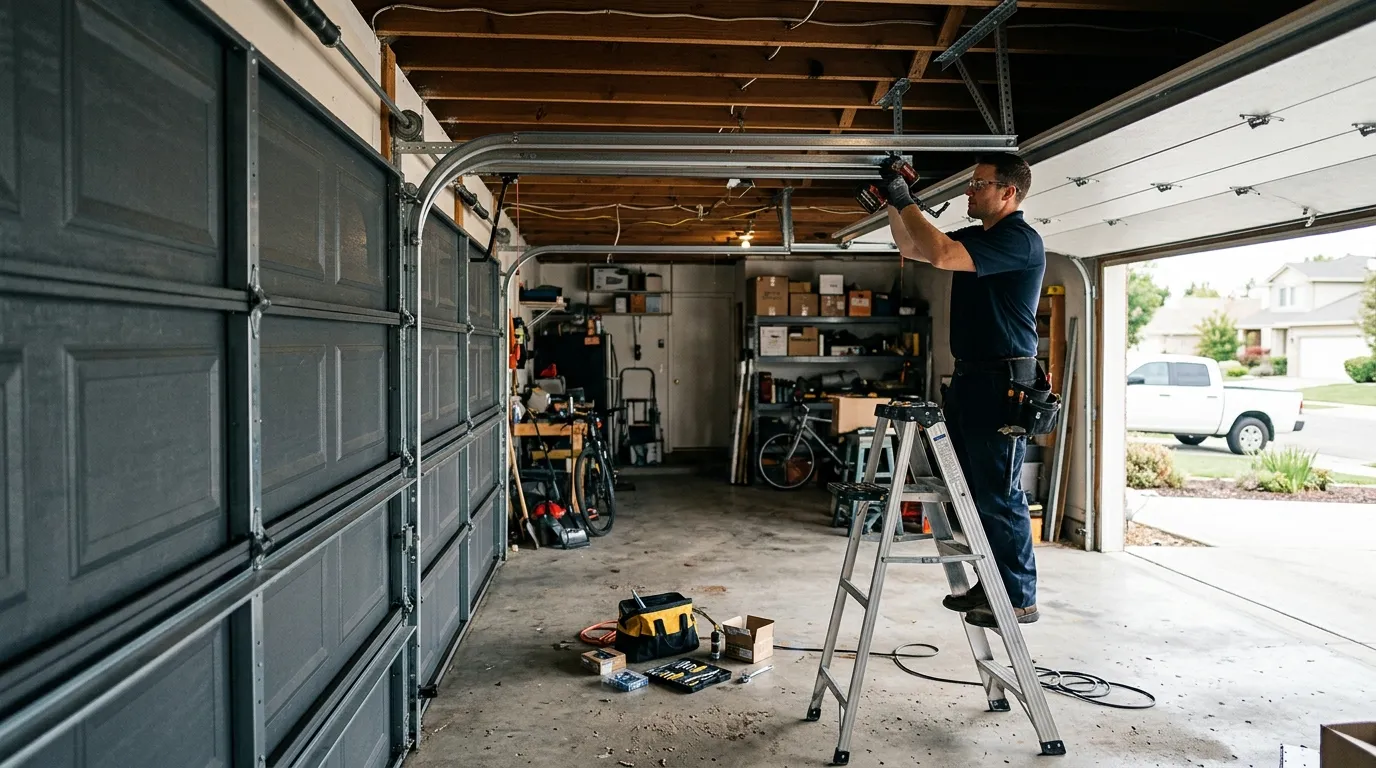
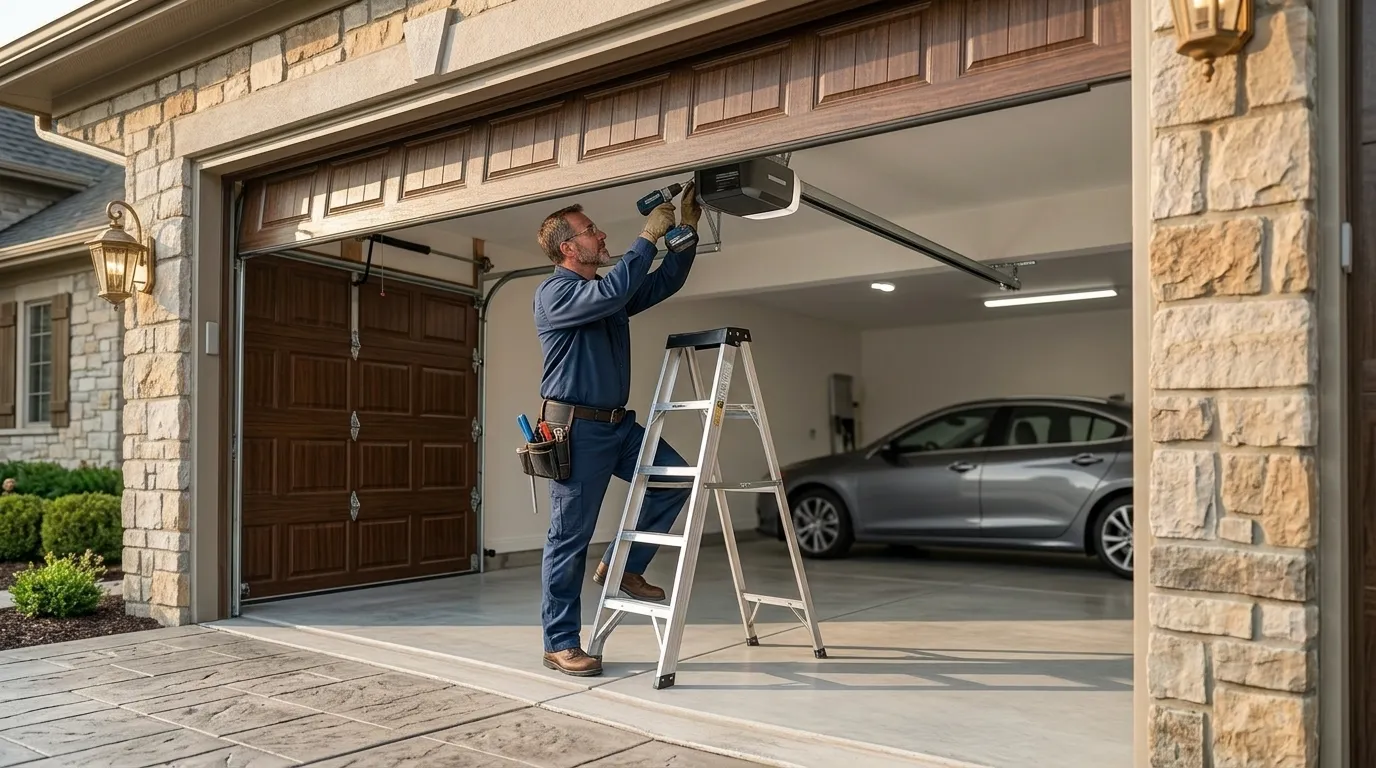
If the door is a straight opener swap or a roller replacement, that's more predictable and we can usually give you a tighter number up front. If it's a spring, a bent track, or a panel that's been hit, we want eyes on it first.
You can start a request through our site and tell us what you're seeing - grinding, a door that won't stay up, a remote that's stopped working. We'll go from there.