Garfield sits about 13 miles from Austin, and the houses here mostly went up around 1990 - a bit earlier than the broader Austin service area, where the median build year runs closer to 1998. That decade matters more than people think. A door built in 1990 came with different spring hardware and a different track profile than one built in 2005, and openers from that era rarely have the safety sensors or rolling-code boards that are standard now.
With 809 households in Garfield, this isn't a dense subdivision grid - it's a smaller, more spread-out community, and a lot of the original garage doors and openers are still in service because nobody's had a reason to replace a door that still closes. Median household income here runs $71,607, noticeably lower than the $121,750 median across the wider Austin area we cover, which tends to mean more repair calls and fewer full-replacement calls. That's not a knock on the area - it's just a different kind of job than what we see closer in.
We don't have a landmark-by-landmark read on Garfield's streets, so we won't pretend to. What we do know is the housing age, and that tells us most of what we need before we even load the truck.
Getting Here
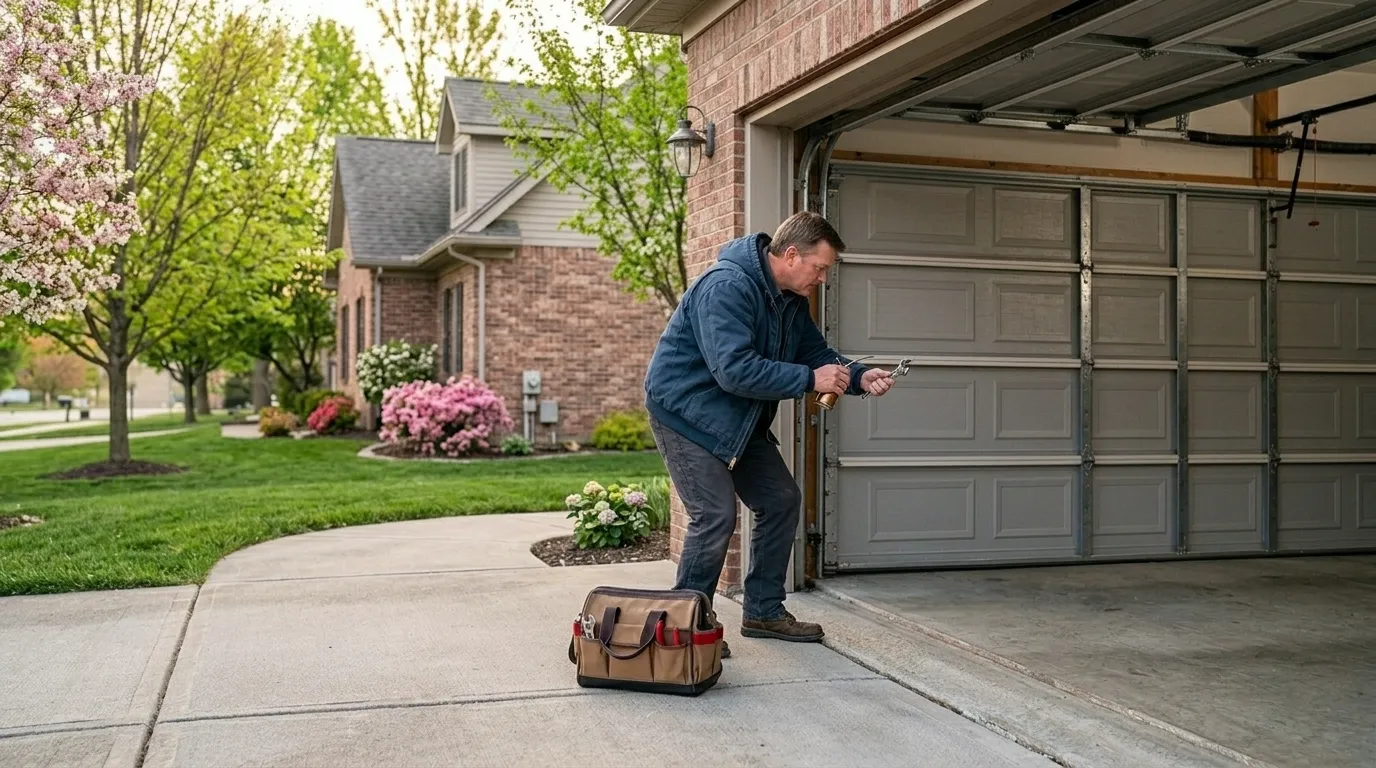
We run out of Austin, roughly 13 miles from Garfield. There's no depot or shop out this way - every job means a truck making that drive, so we schedule Garfield calls with that travel time built in rather than pretending we're already around the corner.
Austin's service area covers a wide ring of communities at varying distances - places like West Lake Hills at 4 miles and Steiner Ranch at 10 miles are closer in, while Garfield at 13 miles sits further out alongside areas like Pflugerville and Bee Cave at 12 to 14 miles. We mention that not to make Garfield sound remote, but because it's the honest answer to 'how fast can someone get here' - it depends on where the truck is coming from that day, and it's coming from Austin.
What the Housing Means for Your Door
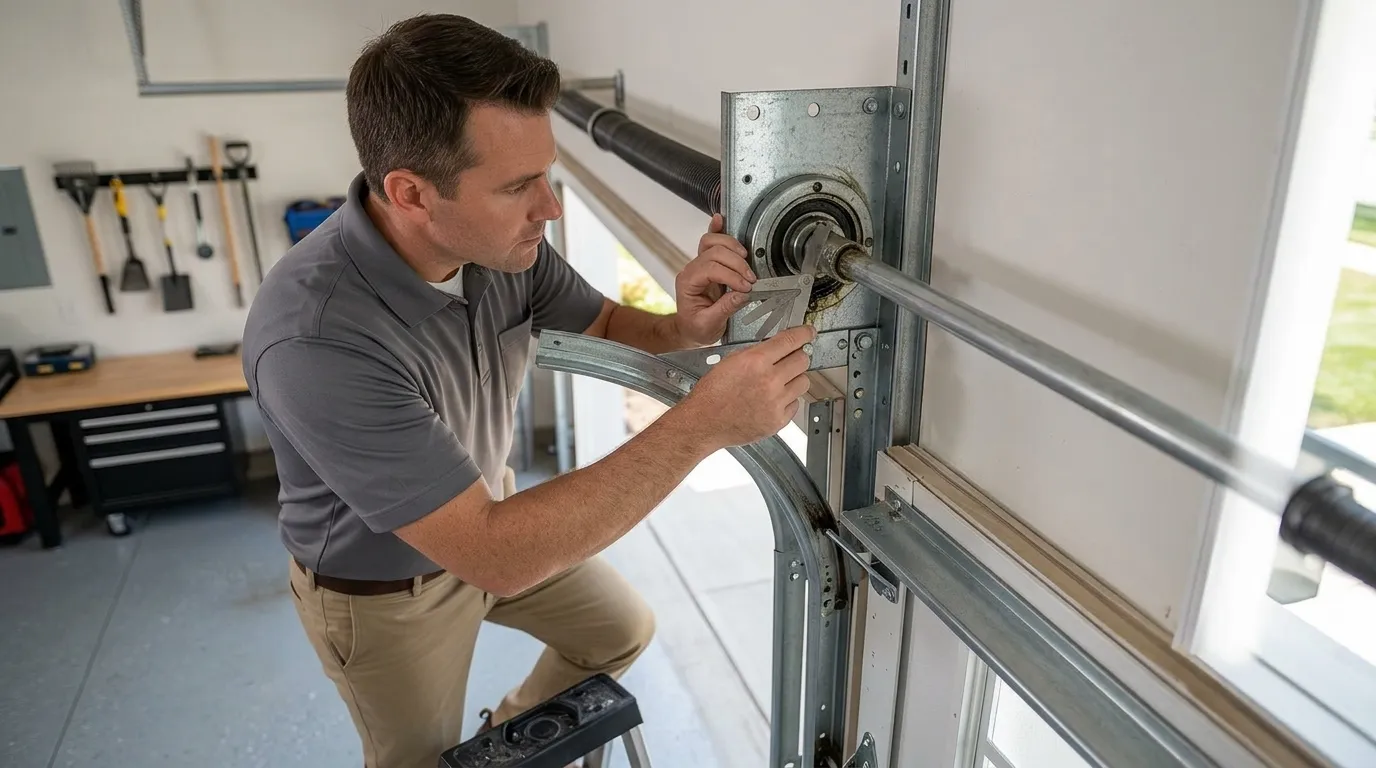
A garage door installed around 1990 was very likely built with a standard torsion or extension spring setup rated for the door weight standards of that period, not today's heavier insulated steel panels. If a Garfield homeowner has swapped in a heavier replacement door on original 1990-era spring hardware, that spring is working harder than it was sized for - and it shows up as premature spring failure or a door that feels heavy to lift by hand.
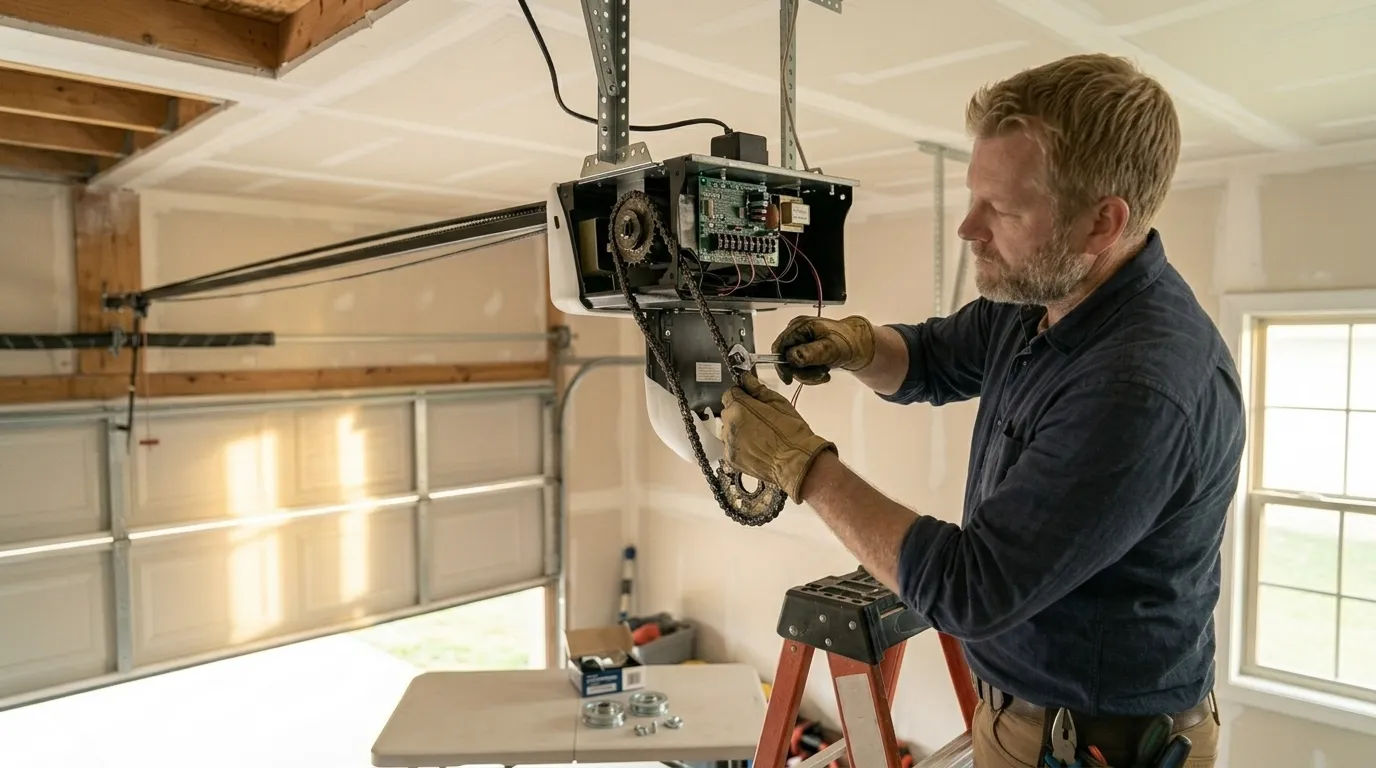
Openers from that era are also a common thread. A chain-drive opener installed new in 1990 has had three decades of belt, gear, and capacitor wear, and most don't have the photo-eye safety sensors required on openers made after 1993. If we find one of those still running in Garfield, replacing the opener - not just repairing it - is usually the honest recommendation, since parts for units that old are hard to source and not worth chasing.
The moderate heat exposure in this part of Texas also plays a role over 30-plus years: nylon rollers and rubber weatherseals dry out and crack faster than the metal hardware around them, which is often the first thing to go on a door this age.
The Calls We Get From Here
Given the 1990 median build year, the calls we get from Garfield lean toward aging hardware rather than fresh installation problems: torsion springs that have finally reached the end of their cycle count, rollers that have gone from nylon-smooth to grinding, and openers old enough that the logic board or capacitor has simply worn out. We also see a fair number of doors where the original springs are undersized for a heavier replacement panel installed at some point since.
One honest limit: if an opener is old enough that its control board is discontinued, we won't spend an hour hunting for a part that doesn't exist anymore - we'll tell you straight that a new opener costs less than the labor to keep chasing a dead one. That's not a sales pitch, it's just the math on a 30-year-old unit.
We travel out from Austin for these jobs, so we ask Garfield homeowners to describe the door's age and opener brand when they call - it lets us bring the right springs and drive components on the truck the first trip, instead of a second visit for a part we didn't know we needed.
How it works
From “it’s stuck” to “it’s fixed”
01
Tell us what’s wrong
Describe the symptom - won’t open, loud bang, opener runs but the door won’t move.
02
On-site diagnosis
A technician tests the door under power and by hand and finds what actually failed.
03
Clear, up-front plan
You get the fix that’s needed and what drives the cost - before any work starts.
04
Repaired & tested
The repair is done, the door is set true and tested, and the work area left clean.
Serving Austin, TX - call 17374360211 or request a quote online.
No. We're based in Austin and drive out to Garfield, about 13 miles away, for every job. There's no local depot, so we build travel time into scheduling rather than promising a specific arrival window before we know the day's route.
Why does my opener from 1990 need photo-eye sensors added?
Openers made before 1993 generally weren't required to have photo-eye safety sensors. If yours doesn't have them, we can sometimes retrofit a bracket kit, but on a unit that old it's often more practical to replace the opener with a current model that has the sensors built in.
Is my original 1990s spring the wrong size for my current door?
It can be, especially if the original door was replaced at some point with a heavier insulated steel panel. A spring sized for a lighter 1990-era door will wear out faster and can make the door hard to lift by hand. We check spring sizing against the actual door weight before doing a repair.
Ready to get your garage door sorted?
Tell us what it’s doing and where you are in Austin - we’ll take it from there.