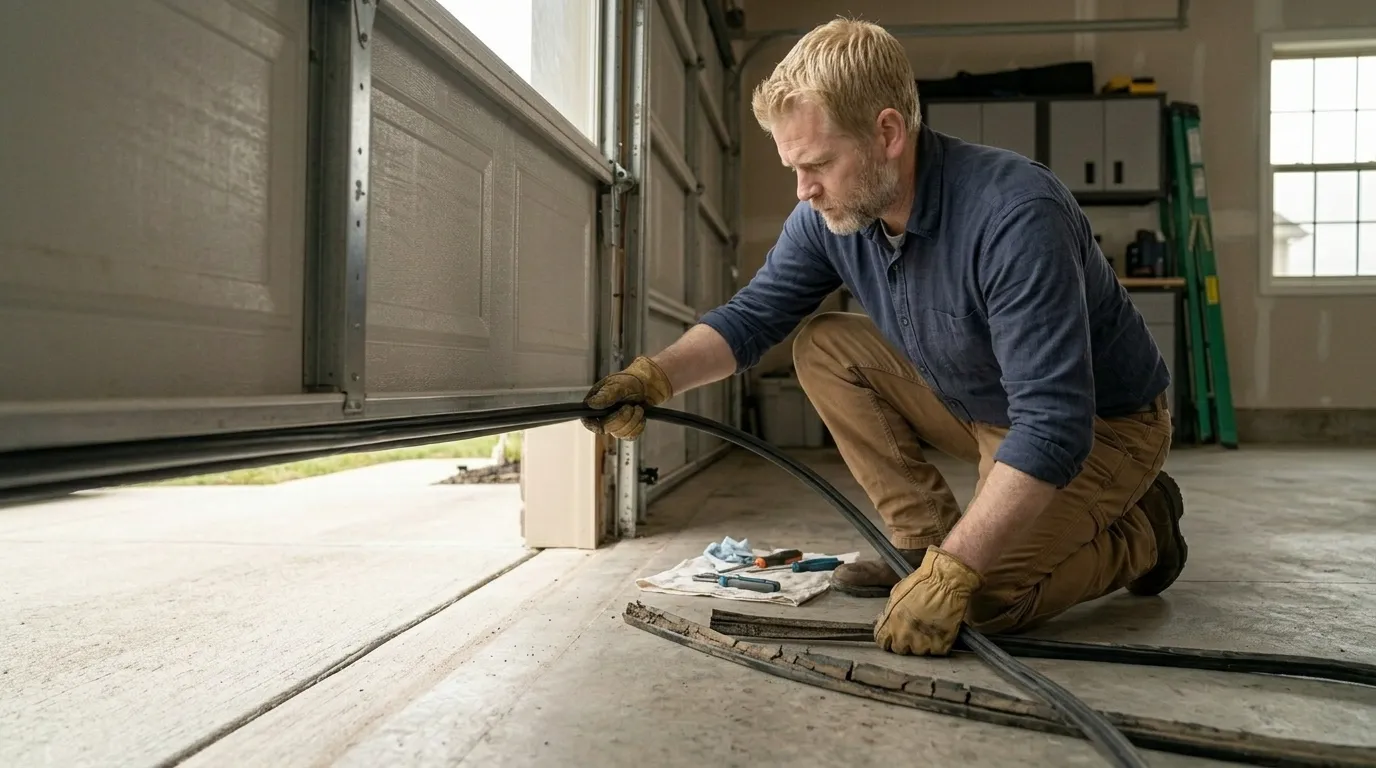
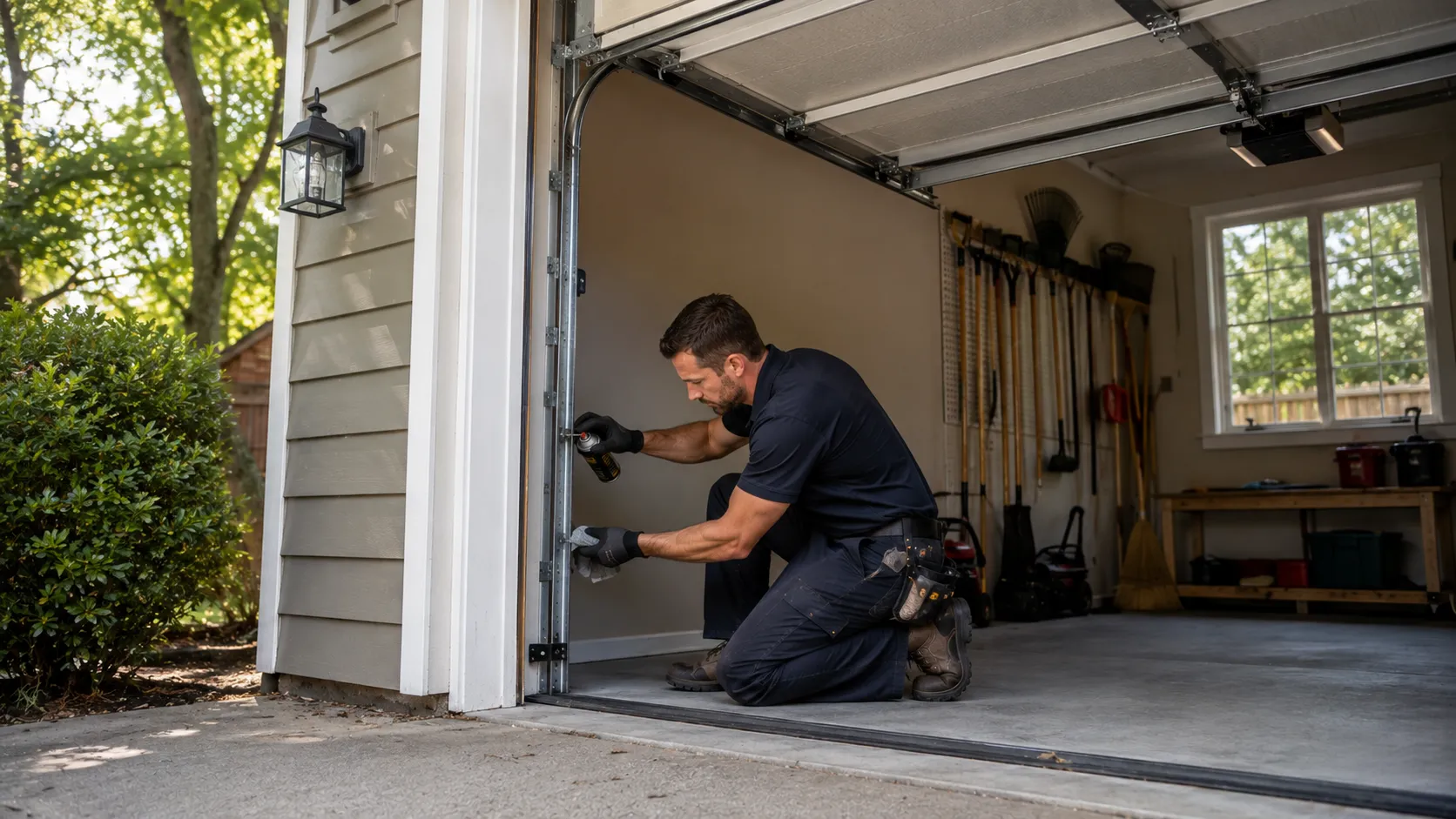
Briarcliff homes mostly date to 2002, newer than the wider Austin service area. We drive out from Austin for spring, opener, and track repairs on these late-model doors.
Briarcliff's median home was built around 2002, which puts most of this neighborhood a few years past the 1998 median for the broader Austin area we cover. That gap matters more than it sounds. A house built in 2002 almost certainly shipped with a factory steel door on a torsion spring system and a chain or belt-drive opener with basic safety-reversal sensors, not the older extension-spring setups you'd find on 1970s or 1980s stock. With 1,042 households out here, this isn't a huge market, but it's a fairly consistent one in terms of build era. You won't find much of the pre-1980s hardware that trips up repair techs elsewhere in the region - torsion springs, standard track widths, and openers built for code compliance are close to universal here. That consistency is actually good news when something breaks: parts are more likely to be common stock, not a discontinued bracket size.
Getting Here
Briarcliff sits about 19 miles from Austin, which is the far edge of where we run calls. We don't keep a truck stationed out here - we're dispatching from Austin every time, so if you call, know that the drive is part of the job. We still take Briarcliff calls, but same-day availability depends on what's already on the schedule that day. If you need a door looked at and it's not an emergency, mentioning that when you call helps us route the trip efficiently instead of promising a window we can't hit.
What the Housing Means for Your Door
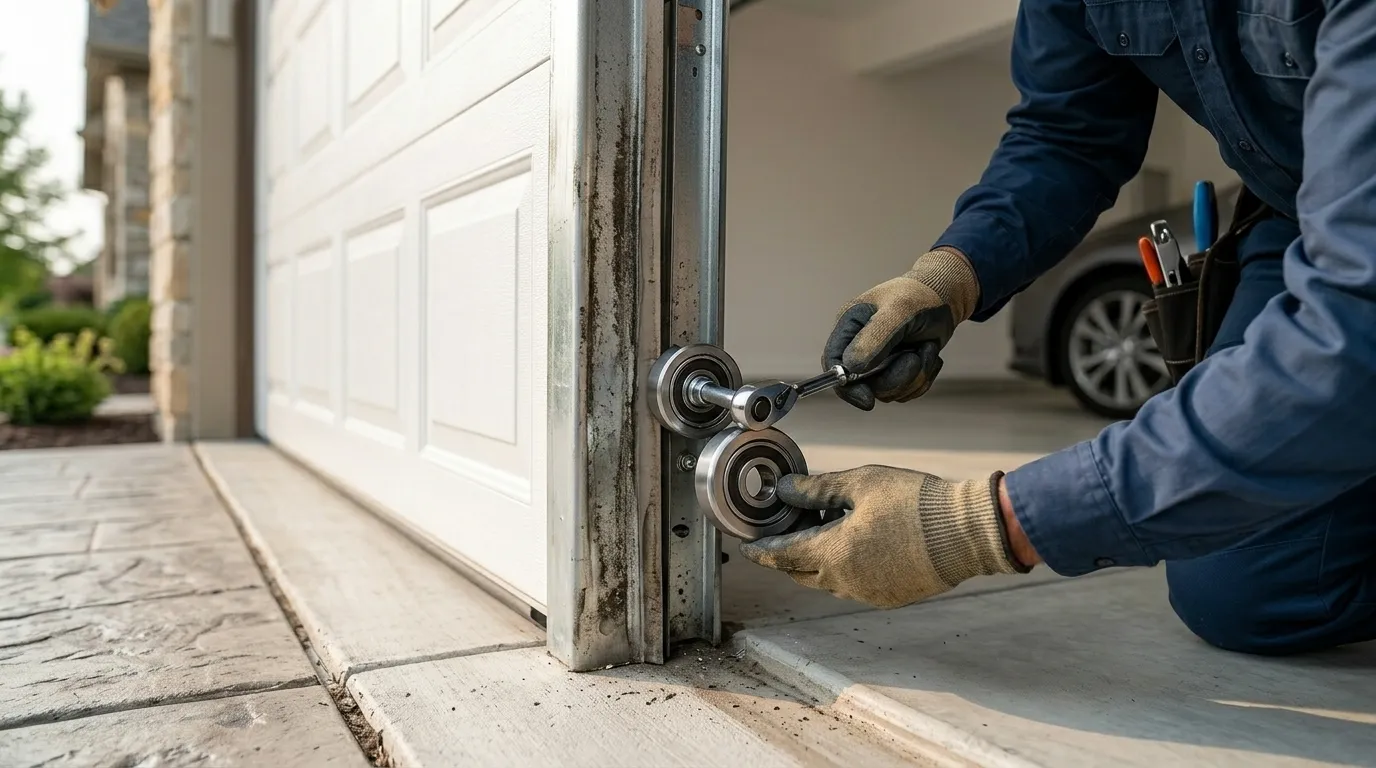
Because most Briarcliff doors date to somewhere around 2002, the common failure points are what you'd expect from a 20-plus-year-old torsion system rather than from an ancient one. Torsion springs are typically rated for a number of open-close cycles, and a door installed in the early 2000s has had two full decades to work through that cycle count - this is often where we find the spring near end of life, not snapped yet but sagging or unbalanced. Nylon rollers from that era have usually gone brittle and noisy by now. Opener circuit boards and logic boards from the early 2000s are also aging out; if yours still has the older photo-eye sensors mounted low on the track, that's original equipment and worth having checked. What we don't see much of here is the seized, undersized 1960s-era hardware common in older parts of the region - Briarcliff's stock is younger, so the fixes tend to be wear-and-tear replacements rather than full system overhauls.
The Calls We Get From Here
From Briarcliff, the calls we get most often are torsion springs that have lost tension gradually rather than snapped outright, openers that grind or reverse without cause, and rollers that have started chattering in the track. Given the median household income here is $129,524, somewhat above the wider service area's $121,750, we also get more calls asking about full opener upgrades rather than patch repairs - people out here are often ready to replace instead of nurse along a marginal part. One honest note: if your door and opener are both original to a 2002 build, a spring replacement alone sometimes isn't the most cost-effective fix once you add up the opener's age too. We'll tell you straight if replacement makes more sense than a repair bill that only buys you a year or two.
How it works
From “it’s stuck” to “it’s fixed”
01
Tell us what’s wrong
Describe the symptom - won’t open, loud bang, opener runs but the door won’t move.
02
On-site diagnosis
A technician tests the door under power and by hand and finds what actually failed.
03
Clear, up-front plan
You get the fix that’s needed and what drives the cost - before any work starts.
04
Repaired & tested
The repair is done, the door is set true and tested, and the work area left clean.
Serving Austin, TX - call 17374360211 or request a quote online.
No. We run out of Austin and drive to Briarcliff for calls, about 19 miles each way. We still take jobs out here, but we don't keep a truck or staff stationed locally, so scheduling depends on that day's route.
Why does my door's age matter for repair?
Briarcliff's homes are mostly built around 2002, which means torsion springs, factory steel doors, and openers with photo-eye sensors - not the older extension-spring or pre-code hardware found in older parts of the region. Knowing the build era helps us bring the right parts the first time.
Is my spring actually broken or just weak?
A lot of Briarcliff calls turn out to be a torsion spring that's lost tension after roughly two decades of cycles rather than one that's snapped. Signs include the door feeling heavy to lift by hand or the opener straining. We can check tension without replacing anything unnecessarily.
Ready to get your garage door sorted?
Tell us what it’s doing and where you are in Austin - we’ll take it from there.