Belterra homes were mostly built after 2012, newer than the Austin-area norm. We travel from Austin for openers, springs, and panel work suited to that stock.
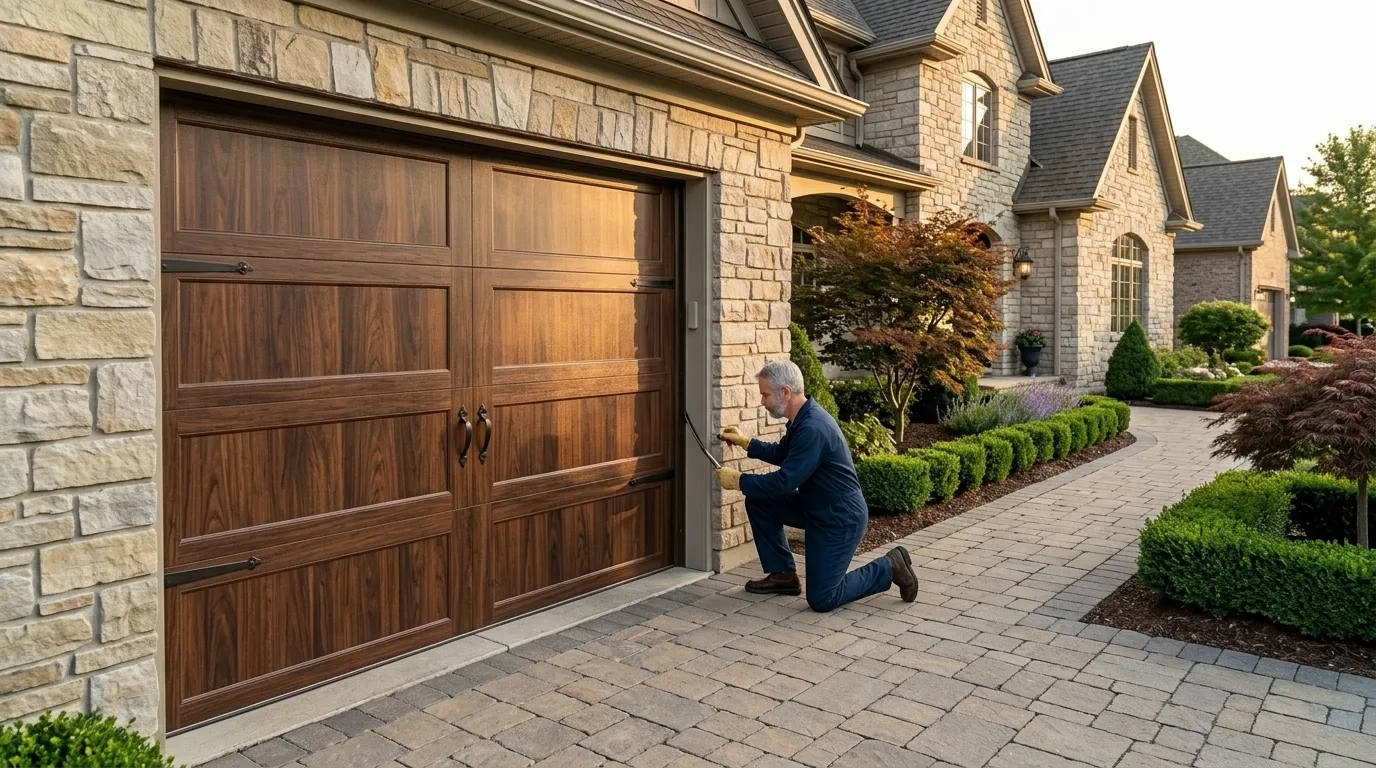
Belterra is one of the newer pockets we cover. Most of the neighborhood went up around 2012, which puts it well past the 1980-2014 build window that covers most of the wider Austin service area, where the typical house dates to 1998. That gap matters more than it sounds like it should. A house built in 2012 came with a steel door, a factory-installed opener with rolling-code security, and torsion springs sized for modern insulated panels rather than the older solid-wood or single-layer steel doors still common on 1990s streets. Belterra also runs wealthier than the surrounding area - median household income here is about $211,471, against roughly $121,750 across the broader service territory - and higher-end builders in this price range tended to spec heavier insulated doors and belt-drive openers instead of the cheaper chain-drive units common in older, lower-cost subdivisions. When we get a call from Belterra, we're not guessing at what's behind the door. We're expecting newer hardware, and usually finding it.
Getting Here
Belterra sits about 16 miles from our base in Austin. It's a straightforward run, and there's no separate crew or depot out this way - every truck that shows up in Belterra came from Austin, same as it does for the closer-in neighborhoods. That distance doesn't change what we bring or how we price a job, but it does mean we plan the trip when you call rather than having someone already parked nearby. If you need same-day work, say so when you call so we can route the day around it.
What the Housing Means for Your Door
Newer construction changes the failure list. On a 2012-era door, we rarely see the rot, warping, or crumbling old wood jambs that show up on the region's 1990s stock. What we do see: opener logic boards that have simply aged out after a decade-plus of daily cycles, worn nylon rollers on doors that have run enough seasons to need it, and torsion springs reaching the end of their rated cycle count right on schedule. Because Belterra's doors were largely installed within a few years of each other, springs and openers across the neighborhood tend to fail in the same age band rather than being scattered across forty years of hardware generations like you'd find in an older part of town. That consistency actually makes diagnosis faster - we know roughly what era of parts we're walking into before we open the truck.
The Calls We Get From Here
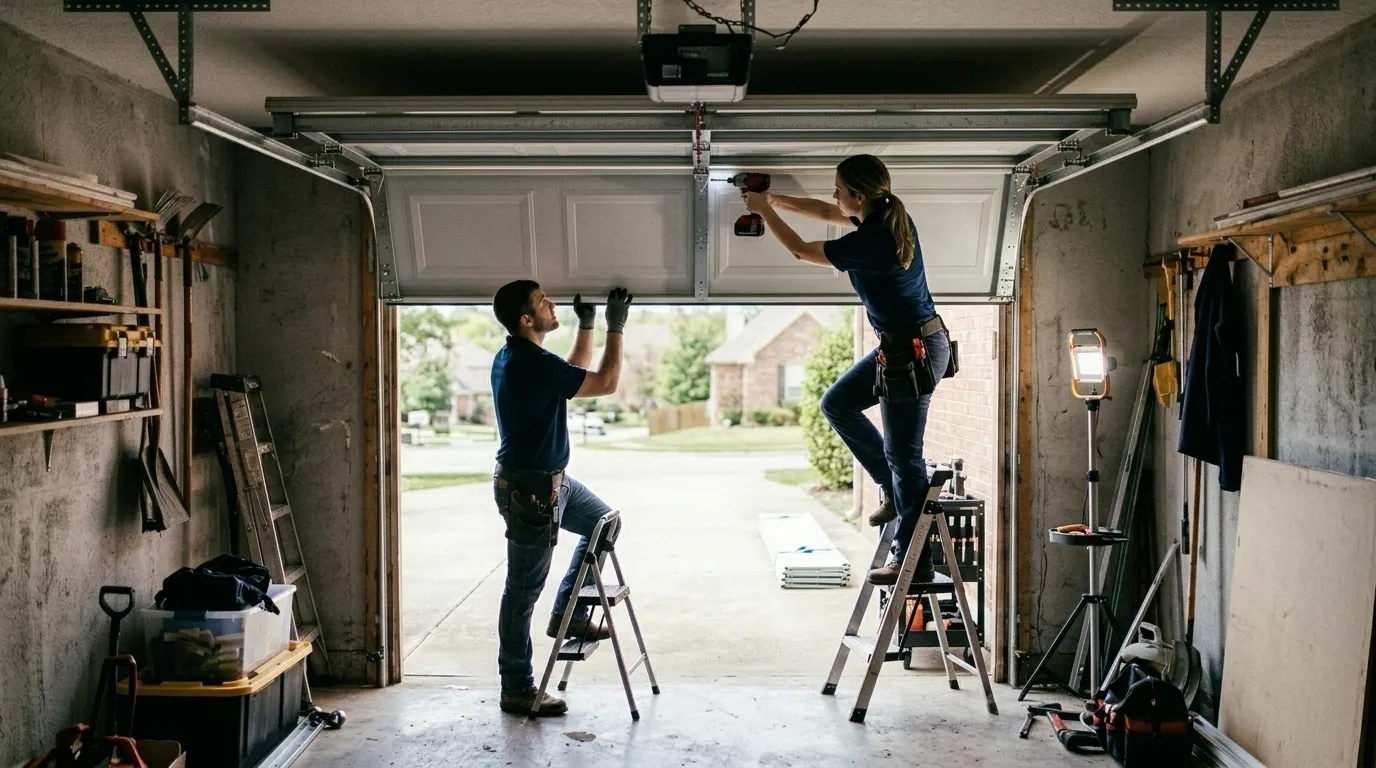
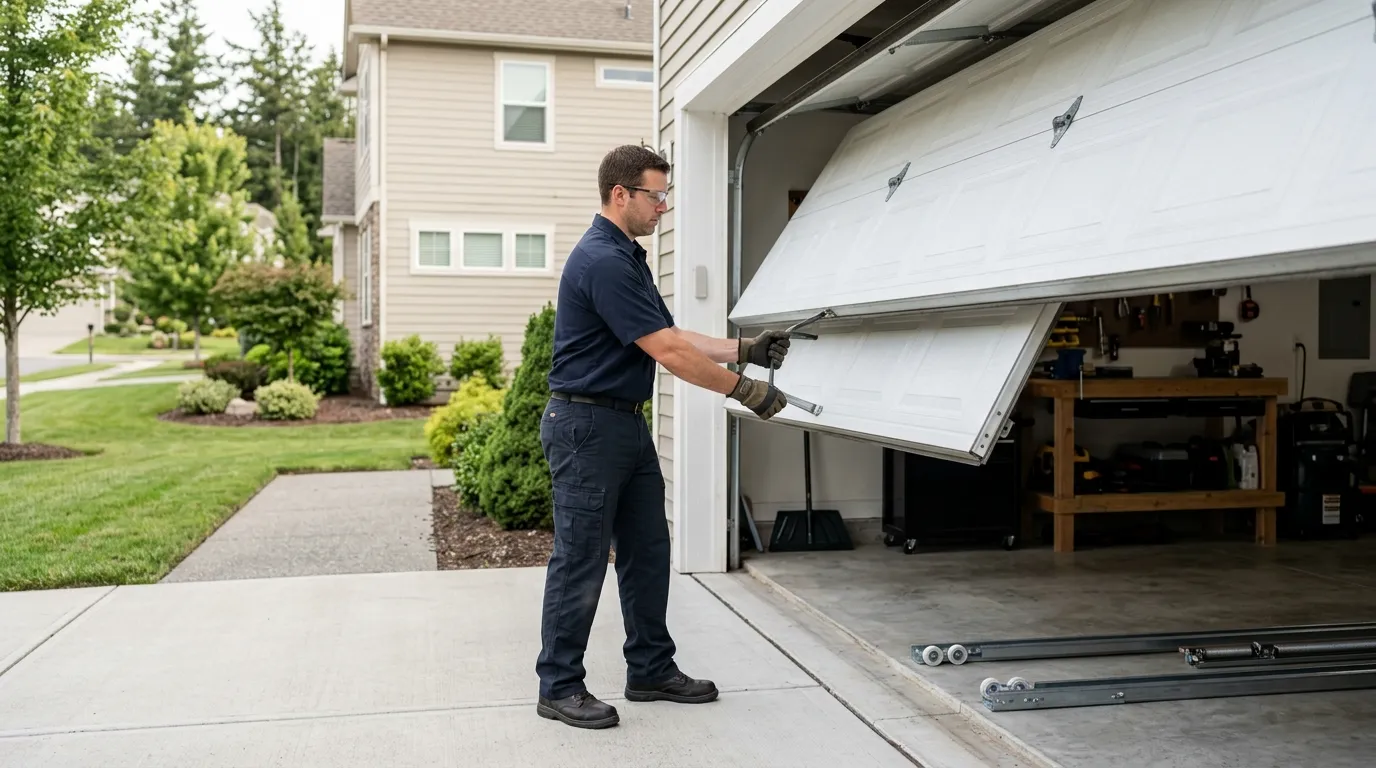
The most common call from Belterra is an opener that's stopped responding to the wall button or the remote, usually a board or logic board issue rather than a mechanical one, given the age of the housing stock. Second most common: a spring that's reached the end of its cycle life and let go, usually on a double door carrying more panel weight than a single. We also get calls about noisy rollers on doors that have run several thousand cycles without lubrication - a cheap fix if caught early, a track replacement if ignored too long. One honest limit: if a spring has failed and the opener board is also gone, we'll tell you plainly when replacing the whole unit costs less over time than patching two separate failures on the same trip.
How it works
From “it’s stuck” to “it’s fixed”
01
Tell us what’s wrong
Describe the symptom - won’t open, loud bang, opener runs but the door won’t move.
02
On-site diagnosis
A technician tests the door under power and by hand and finds what actually failed.
03
Clear, up-front plan
You get the fix that’s needed and what drives the cost - before any work starts.
04
Repaired & tested
The repair is done, the door is set true and tested, and the work area left clean.
Serving Austin, TX - call 17374360211 or request a quote online.
No. We run out of Austin, about 16 miles away, and travel out for every Belterra job. There's no local depot, so plan for us to arrive by truck rather than already being in the neighborhood.
Are Belterra garage doors different from older Austin homes?
Generally, yes. Belterra's homes date mostly to around 2012, well after the 1980-2014 window that covers most of the service area, so you're more likely to have a factory steel door and a rolling-code opener than the older wood or single-layer steel doors common in 1990s neighborhoods nearby.
What's the most common repair call from this neighborhood?
Opener boards that have aged out after years of daily cycling, and torsion springs reaching their rated cycle limit. Both are common failure points on houses in Belterra's build era, more so than the wood rot or warped track issues that show up on older housing stock.
Ready to get your garage door sorted?
Tell us what it’s doing and where you are in Austin - we’ll take it from there.